
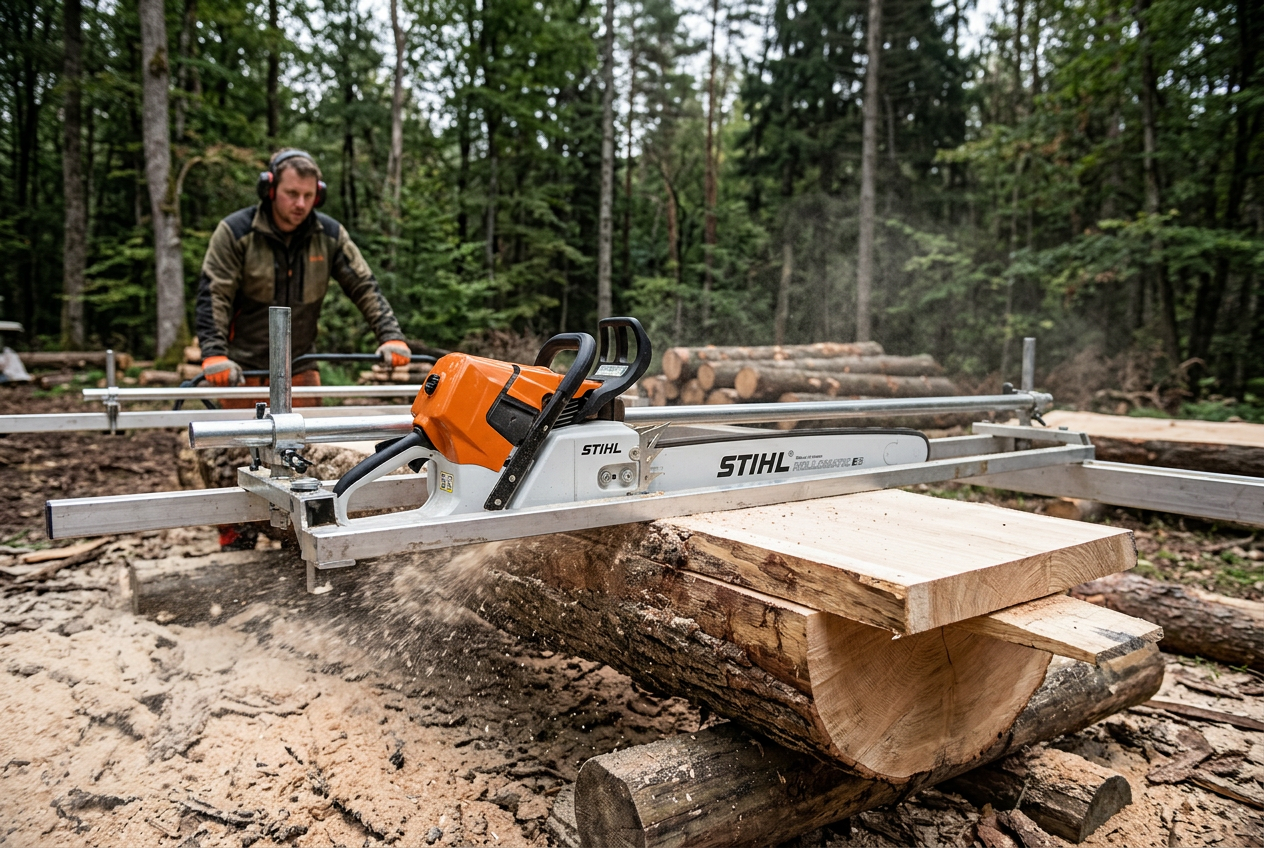
You want a chainsaw that turns logs into straight, usable boards without wasting time or money. Choose a high-torque saw with a long bar (24″ or longer) and a robust guide/mill attachment to mill lumber safely and accurately.
They’ll walk through the features that matter most—engine power, bar length, chain type, and compatible mills—so you can match a saw to specific projects and long-term value.
Expect comparisons of top brands and models for different uses, practical milling tips, and guidance on attachments and maintenance to help decide which setup delivers the best performance for your milling needs.
Last Updated: June 2026 | Will Montgomery tests and evaluates chainsaws and milling equipment firsthand. His recommendations are based on real-world milling sessions with both entry-level and professional-grade saws.
Key Features for Chainsaw Milling
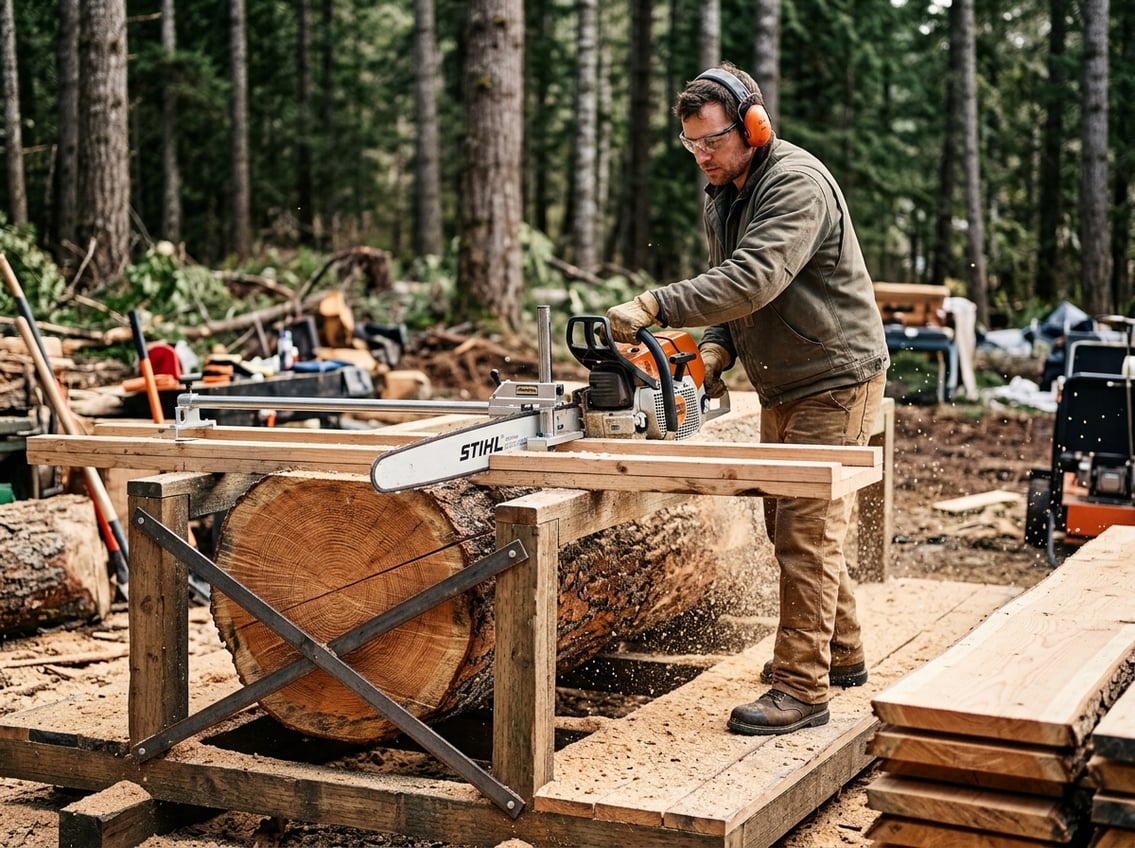
Chainsaw milling needs focused power, a long stable bar, and the right chain type to cut straight, fast, and with minimal heat or kickback. These factors determine what logs can be milled and how much finishing work the boards will need.
Engine Power and CC Requirements
Engine displacement (cc) directly affects torque and sustained cutting ability. For milling typical 8–24″ logs, most users choose saws in the 50–70 cc range; 70+ cc offers better performance for frequent milling or very large timbers. Smaller 30–45 cc consumer saws usually lack the low-end torque needed to push a ripping chain through dense hardwood without bogging or overheating.
Look for models with proven cooling and oiling systems, since continuous heavy cuts generate heat quickly. Two-stroke engines with 50–80 cc and a power output around 3–5 kW (4–7 hp) balance weight and cutting force for hobby milling. If milling becomes regular work, stepping to 80–100+ cc or a powerful electric/hybrid option reduces strain and cycle time.
Bar Length Considerations
Bar length sets the maximum width of a single pass and the types of logs that can be milled. A 20–28″ bar suits most homestead jobs and provides a balance between reach and stiffness. For logs over 30″ diameter or longer planks from a single pass, 36″ bars or longer are common, but they increase vibration and need a heavier frame to remain straight.
Longer bars require stronger drive systems and stiffer guide mounts in the mill setup. Heavier bars also demand more power (higher cc) to maintain chain speed under load. Practical pairing examples: 50–60 cc engines perform best with 20–24″ bars; 70+ cc engines match well with 28–36″ bars. Always check manufacturer compatibility and use a quality bar rated for milling loads.
Ripping Chains vs. Crosscut Chains
Ripping chains have teeth ground with shallower top-plate angles and larger gullets to cut along the grain; they remove wood more smoothly and generate less heat when milling. That makes a ripping chain the preferred choice for chainsaw mills because it reduces grab, improves feed rate, and leaves a flatter surface that requires less sanding.
Crosscut (standard) chains are optimized for felling and cutting across grain and create more tear-out and dust when used for milling. They work in a pinch for thin planks or short tasks but increase cutting time and finish work. For milling, pick a dedicated ripping chain matched to the bar pitch and gauge; common choices include 3/8″ low-profile ripping and 0.325″ ripping options depending on the saw’s sprocket and feed characteristics.
Top Brands for Milling Lumber
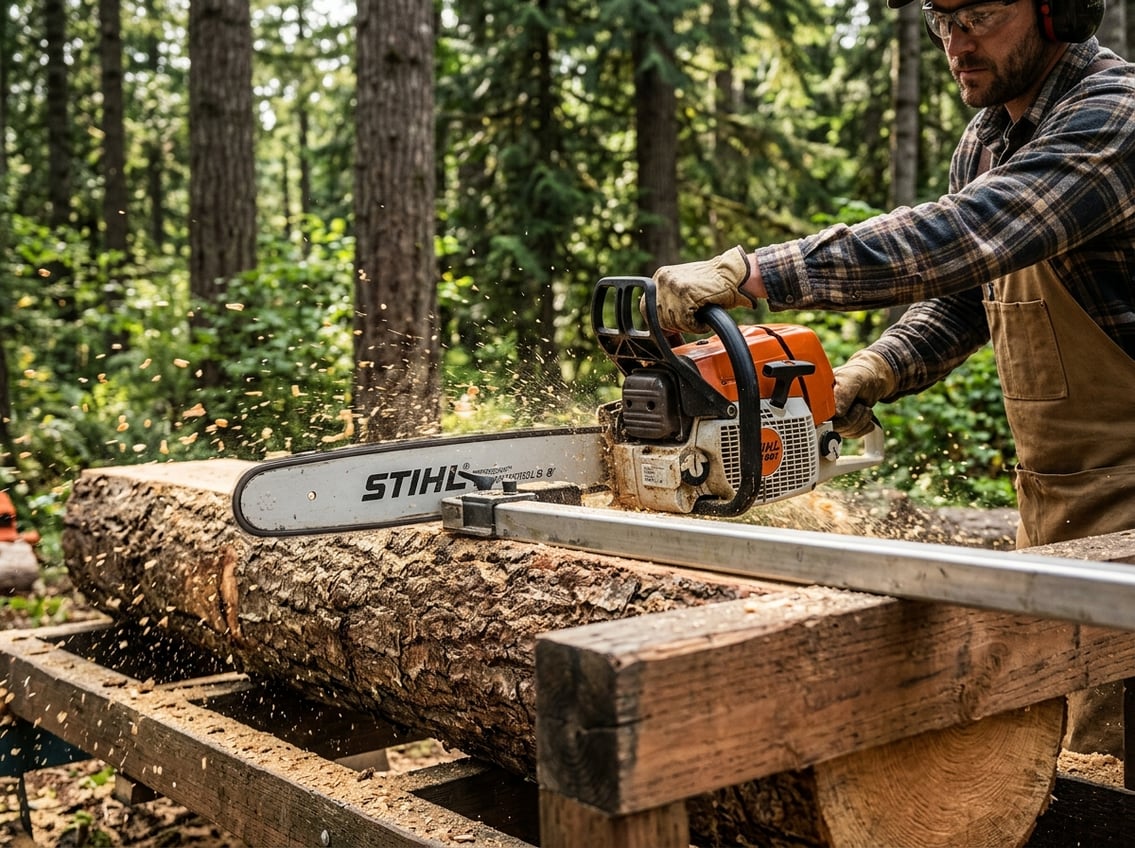
The brands below are known for durable engines, long bars, and parts availability—key factors when converting logs into boards. They offer models suited to heavy milling, spare parts networks, and aftermarket mill attachments.
Husqvarna Chainsaws: Strengths and Options
Husqvarna provides long-bar, high-displacement saws frequently chosen for milling. Models like the Husqvarna 460 Rancher (the most accessible milling saw in the lineup) feature large displacement two-stroke engines, robust crankcases, and bar lengths that support 24–36 inch milling setups. These saws deliver sustained torque for deep ripping cuts and tolerate continuous heavy loads better than lighter consumer models.
Serviceability and parts access matter for frequent millers. Husqvarna’s global dealer network supplies genuine carburetors, clutch drums, and replacement bars. Aftermarket milling attachments and guide rails commonly fit Husqvarna bars, making conversion to an Alaskan-style or chainsaw mill straightforward.
Operators value vibration damping and chain oiling. Husqvarna integrates advanced anti-vibration mounts and efficient oil pumps on pro-grade units, reducing operator fatigue during long milling sessions. Fuel efficiency and starting systems also help on remote jobs where refueling convenience and reliable restarts matter.
Stihl Chainsaws: Power and Reliability
From experience: Will ran a Stihl MS 460 for his own milling work — bought it specifically to build a table from logs he cut himself. The saw handled everything he needed. The logs are still drying in the rafters of his pole building, waiting on the day there’s enough free time to finish the project.
Stihl focuses on professional-grade powerheads that excel at steady, controlled ripping. Models such as the MS 661 and MS 881 provide high torque at low RPMs, which suits milling where consistent feed rate matters more than peak top-end speed. Stihl’s engineered combustion and filtration systems sustain performance in dusty, resinous conditions typical of milling.
Durability and closed-loop support are strong points. Stihl’s service centers and OEM parts ensure timely replacement of wear items like guide bars, sprockets, and chains. Compression, ignition, and carburetor tuning can be maintained to preserve the low-end grunt needed for thick boards.
Ergonomics and accessory compatibility support long sessions. Stihl offers pro-grade anti-vibration systems and high-capacity oiling to keep chains running cool. While Stihl bars and mills exist in the aftermarket, buyers should verify bar length and mounting options to match chainsaw mills before purchase.
Compatible Milling Attachments
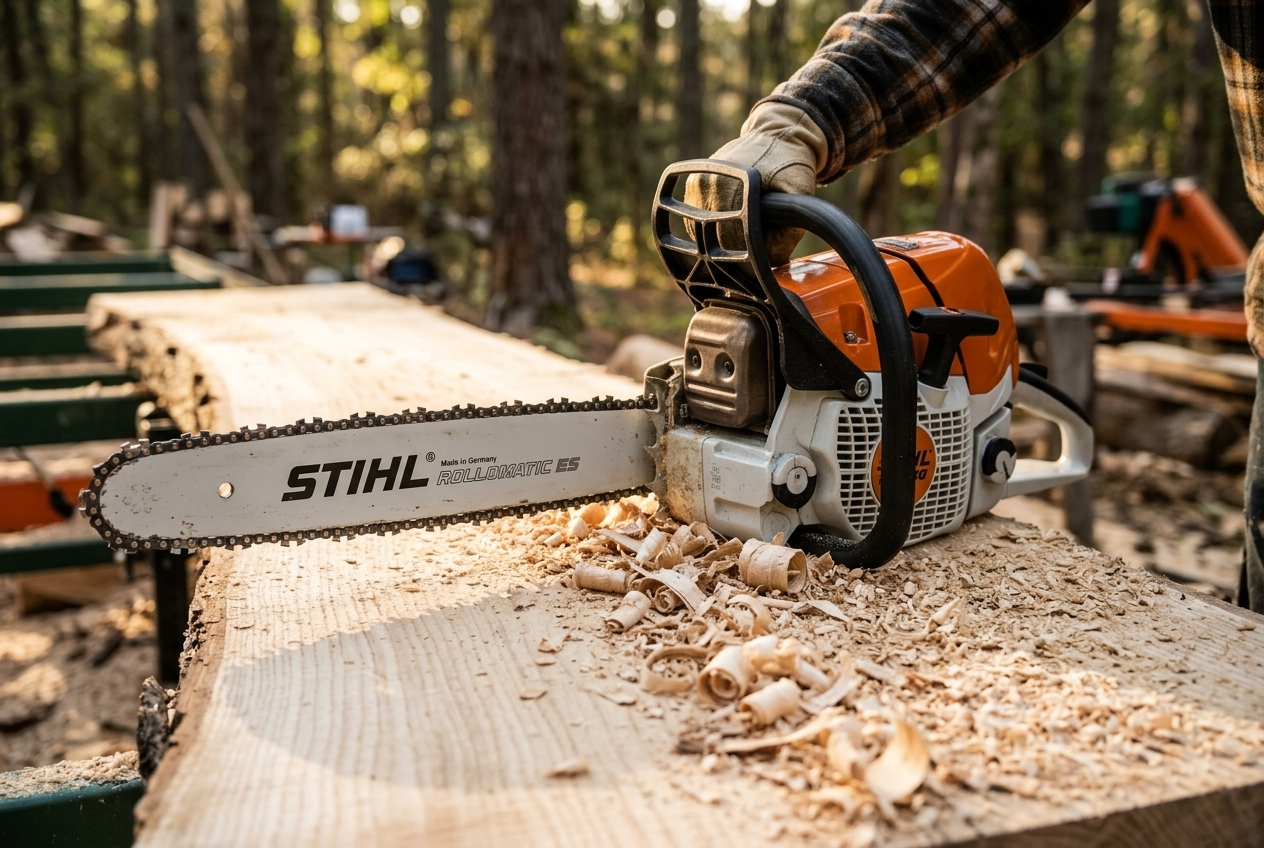
Milling attachments convert a chainsaw into a portable sawmill, affecting cut width, accuracy, and setup time. Important factors include bar length compatibility, guide/rail systems, and build quality for consistent slab thickness.
Granberg Alaskan Mill Chainsaw Setup
The Granberg Alaskan Mill is a common choice for hobbyist and small‑scale milling because it clamps to the chainsaw bar and rides on the log edge, producing boards up to the length of the bar. It requires a minimum bar length typically 20″ or longer for practical milling; longer bars increase maximum board width and reduce the number of passes.
Key setup steps: attach the mill rails to the bar with the supplied clamps, square the mill’s base to the chainsaw, and tighten all fasteners to avoid drift. They must also adjust the guide dogs and fence to control slab thickness and prevent the bar from binding.
Operators should verify the chainsaw’s power and bar oiling. Underpowered saws bog down on deep cuts; inadequate lubrication accelerates chain wear. Granberg sells replacement rails and adapters for bars from about 20″ to 48″, so confirm model compatibility before buying.
Choosing the Right Milling Kit
Select a milling kit by matching capacity, guide type, and durability to the intended workload. Rail‑guided systems offer better straightness and repeatability for longer boards, while bar‑clamp mills like Granberg prioritize portability and low cost.
Evaluate materials: aluminum rails resist corrosion and bend less than stamped steel; thicker rails and robust clamps reduce vibration and improve board flatness. Check cutting width (max board thickness per pass), modular extensions, and whether the kit includes a winch or auxiliary oiler for heavy logs.
Consider the chainsaw’s bar length and power rating first. Then compare kits for compatibility, spare‑part availability, and user adjustments (micro‑adjust fences, angle controls). Prioritize kits with clear assembly instructions and accessible customer support to minimize setup errors and increase milling consistency.
Best Models by Application
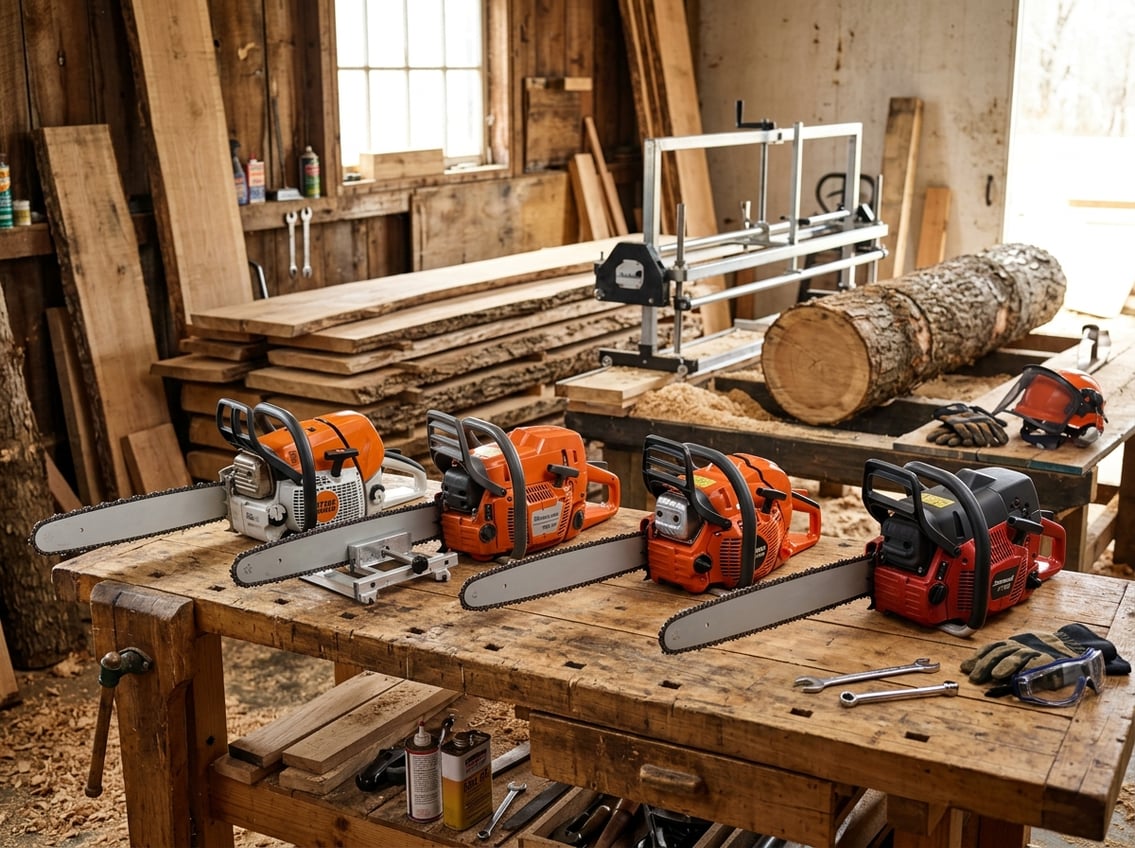
This section highlights top choices matched to the specific demands of heavy-duty milling and cost-conscious milling. It focuses on power, bar length, guide compatibility, and overall value to help pick the right saw for each task.
Best Chainsaw for Milling Large Logs
For milling large-diameter logs, the priority is a high-torque, long-bar saw that handles sustained load without bogging. Heavier pro-grade gas chainsaws with 24–36 inch bar capacity and strong low-end torque perform best; they keep chain speed under load and reduce the number of passes needed to extract wide slabs.
Key features to look for:
- Engine displacement: 70cc+ preferred for continuous deep cuts.
- Bar length: 24–36 inches to span large logs and fit most portable mill rails.
- Chain oiling & cooling: Robust auto-oiler and good airflow to prevent overheating during long cuts.
- Mounting compatibility: Models that accept after-market chainsaw mill adapters or come with mill-ready plates reduce setup time.
They trade higher weight and fuel use for faster milling and fewer re-cuts. Professionals and serious hobbyists often choose these models to maximize slab width and minimize cycle time.
Best Budget-Friendly Chainsaw for Milling
For occasional milling on a budget, a mid-sized saw with durable construction and a 20–24 inch bar often offers the best value. These saws balance affordability with enough power to cut 1–3 inch slabs in multiple passes without excessive strain.
What to prioritize:
- Reliable two-stroke engine or higher-end battery model that sustains rpm under load.
- Stiff, heat-treated bar and a quality chain to hold a sharp edge longer.
- Aftermarket mill adapters availability so the saw can accept a portable chainsaw mill later.
- Serviceability: Easy parts access and a strong dealer network for replacement parts.
They require more passes and patience compared with larger saws, but proper technique and a solid mill guide produce usable lumber at a fraction of pro-model cost.
Comparing Chainsaw Types for Milling
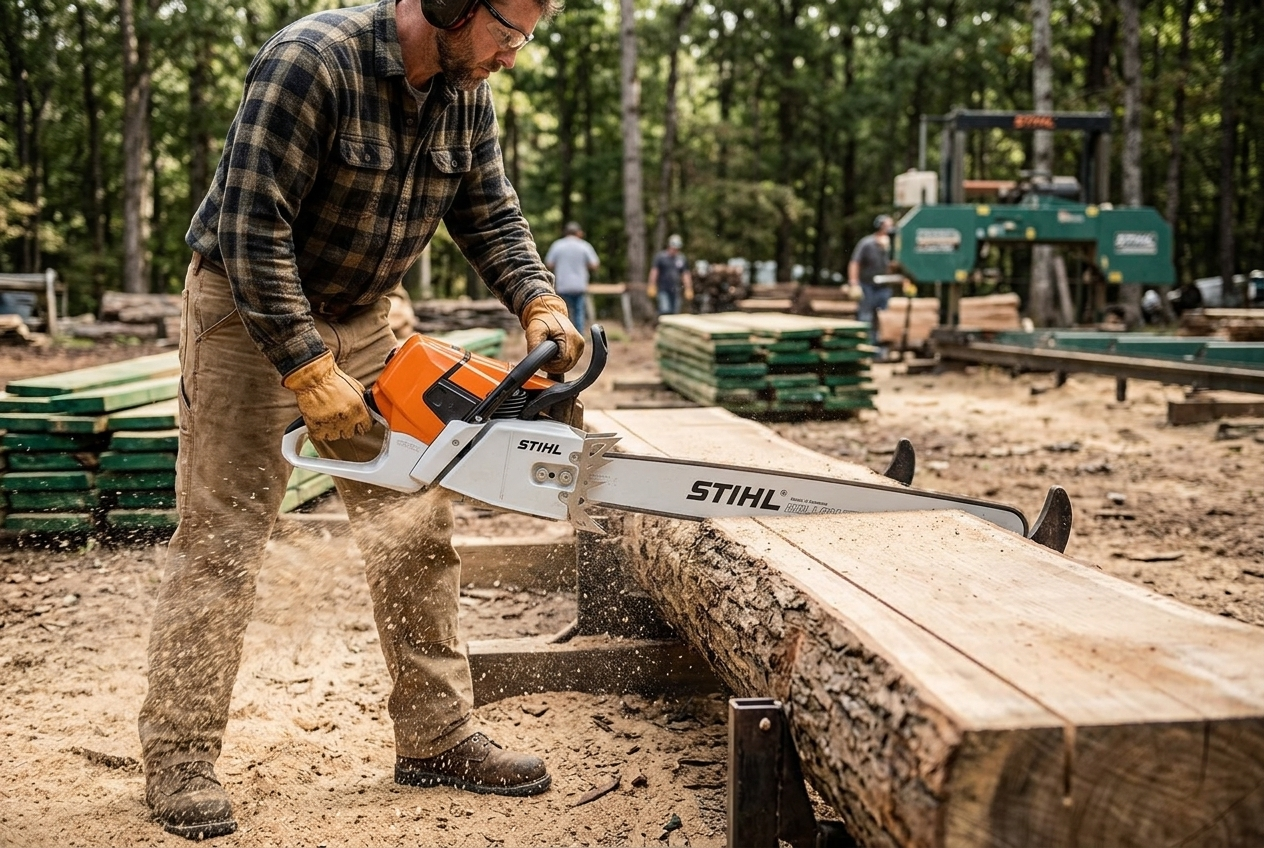
Milling demands power, bar length, and sustained torque. Choices affect cut speed, kerf quality, and how long the saw can run under load.
Gas vs. Electric Chainsaws for Milling
Gas chainsaws deliver higher continuous power suitable for heavy milling. Engines in the 60–120 cc range handle long cuts and larger bars without bogging; they tolerate varied fuel loads and are easiest to pair with chainsaw mills for 24–36″ bars. Expect higher noise, vibration, and maintenance (carburetor, spark plug, fuel mix).
Electric chainsaws (corded or battery) suit smaller milling jobs and cleaner sites. Corded models offer consistent torque but need a heavy-duty extension and usually max out around 20–24″ bars. Battery saws provide lower vibration and simpler startup; powerful brushless models can approach mid-range gas performance but typically lack the sustained torque for continuous cuts on dense hardwoods.
Choose gas for prolonged milling of large logs. Pick electric for short runs, softer species, or where emissions/noise matter.
Recommended Bar Lengths for Different Projects
Bar length should match log diameter and cut goals. For slabs up to 8–12″ thick or logs under 20″ diameter, a 20–24″ bar gives a good balance of maneuverability and cutting capacity. It reduces weight and fuel draw while allowing standard mill attachments.
For logs 20–36″ in diameter or when producing wide slabs, use 24–36″ bars. A 28–36″ bar paired with a 70–120 cc saw keeps chain speed and torque stable through deep cuts. Longer bars increase kerf and weight; plan for stronger mounts and frequent sharpening.
When selecting length, consider the chainsaw’s recommended chain pitch, drive sprocket compatibility, and whether the engine displacement (cc) provides steady RPM under load. Match larger bars with higher cc engines for efficient milling.
Chainsaw Milling Operation Tips
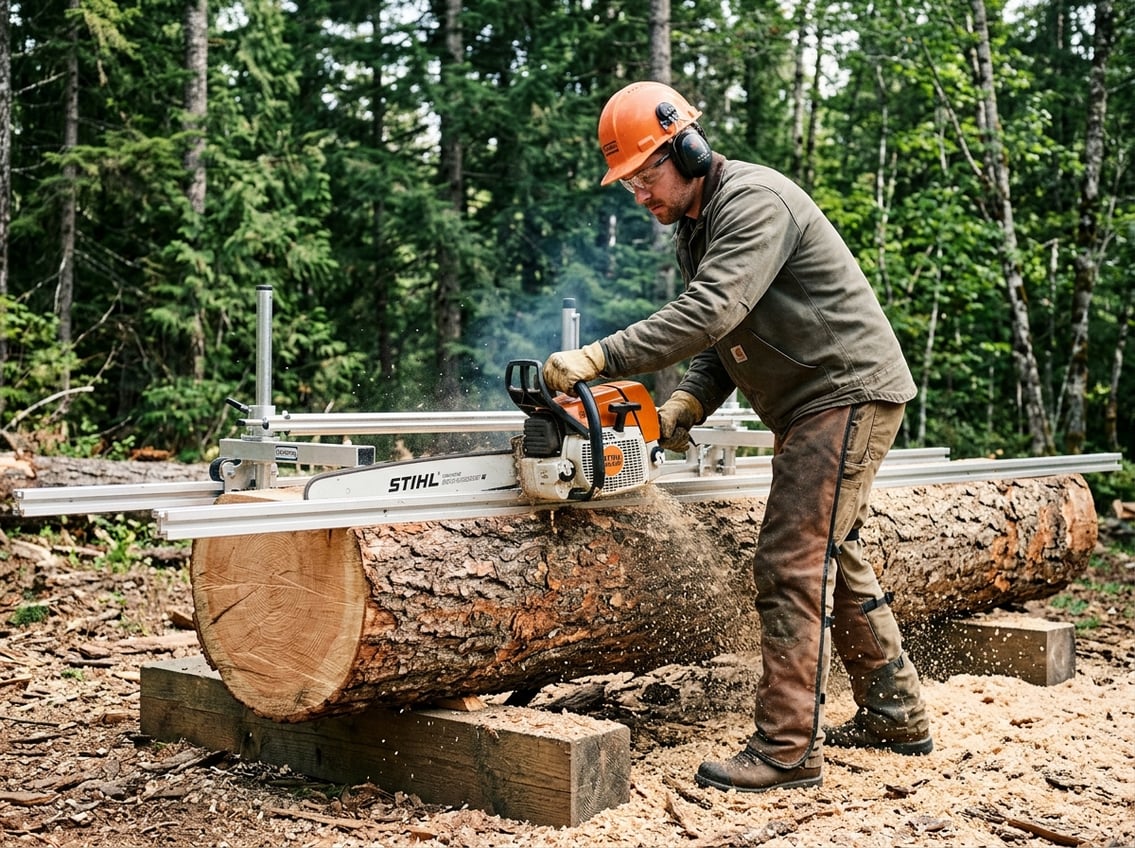
Operators should prioritize safe setup, use a ripping chain for straight, efficient cuts, and maintain correct bar tension and chain sharpness. Proper stance, clamping of the log, and frequent chain inspection reduce kickback and improve cut quality.
Safety Guidelines and PPE
They must wear a full-face shield or safety goggles, a fitted hearing protector, cut-resistant chaps rated for chainsaw use, steel-toe boots, and heavy-duty gloves. A high-visibility jacket helps on shared sites; hard hats protect from falling limbs during log handling.
Before cutting, confirm the log is stable on blocking or saddles and cannot roll. Remove nails, spikes, and foreign objects from the wood with a metal detector or visual inspection. Keep bystanders at least two tree lengths away.
Use an anti-kickback chain and maintain correct chain tension; loose chains increase risk. Plan retreat routes in advance and never cut above shoulder height. Fuel and oil should be stored off the work area, and the saw must be shut off for adjustments or refueling.
Techniques for Efficient Milling
They should set the bar parallel to the log and use a chainsaw mill or guide rails for consistent plank thickness. A ripping chain (specialized grind with flatter cutters) cuts along the grain and reduces tugging; avoid crosscut chains for long rip cuts because they load the saw and produce rougher faces.
Start with a shallow first pass to establish a reference face, then increase depth in controlled increments. Maintain steady feed pressure—too fast dulls the chain and overheats the bar; too slow causes vibration and binds the saw. Use a helper or mechanical wrist to support longer bars and reduce operator fatigue.
Check alignment frequently; even small deviations compound over long cuts. When cutting wide planks, flip the log or re-clamp rather than forcing large single passes. Keep a small gap for compression wood to avoid pinching the bar.
Maintenance and Chain Care
They must sharpen the chain regularly with the correct file size for the cutter and maintain consistent filing angles. For ripping chains, use the manufacturer’s specified flat-top or semi-flat-top profile and set depth gauges (rakers) to recommended heights—too high reduces aggressiveness; too low increases kickback.
Inspect the drive links, tie straps, and rivets for wear; replace the chain when stretch or damaged links prevent proper tensioning. Clean pitch and sawdust buildup from the bar groove and oil ports after each session to ensure lubrication reaches the chain.
Keep bar rails flat and check for burrs; rotate the bar periodically to balance wear. Use a high-viscosity bar oil in hot conditions and keep the oil pump and reservoir clean. Record hours of milling and service intervals to anticipate sprocket and clutch wear.
Evaluating Value and Long-Term Performance
Milling success depends on a machine that stays true under load, predictable lifetime costs, and reliable manufacturer support. Prioritize serviceability, parts availability, and realistic running costs when comparing saws.
Durability Over Time
They should check engine and gearbox construction first: cast-aluminum crankcases and sealed bearings resist heat and contamination better than lightweight stamped parts. Look for bars and sprockets rated for continuous milling loads; bars with reinforced rails and sprocket-nose designs reduce wear on long cuts.
Chainsaws used for milling demand frequent chain and bar maintenance. Expect chain stretch, rivet wear, and bar rail deformation; models with replaceable bar rails or longer warranty on bar and sprocket offer measurable advantages.
Environmental resistance matters. Models with better air filtration, easy-to-clean cooling fins, and corrosion-resistant fasteners last longer in damp or dusty milling sites. They should inspect service access—removable top covers and simple carburetor adjustments cut service time.
Cost of Ownership
They must budget beyond purchase price: fuel, 2-stroke oil, replacement chains, bars, sprockets, and periodic engine services are recurring expenses. High-displacement two-stroke saws consume significantly more fuel; estimate fuel cost per hour of milling for realistic comparisons.
Replacement-chain costs vary by pitch and gauge; choosing common chain specifications reduces expense and speeds procurement. Bar life depends on milling frequency and feeding technique; expect to replace bars more often than on cutting firewood.
Accessory compatibility affects cost. Saws that accept standard mills, guide rails, and ripping chains reduce extra purchases. Buying a slightly higher-priced saw with lower maintenance and better parts availability can yield lower total cost over three to five years.
Warranty and Dealer Support
A comprehensive warranty should cover engine and cutting components separately and include clear mileage or operating-hour limits. They should read fine print for exclusions like “commercial use” which often voids residential warranties during heavy milling.
Local dealer presence matters. Dealers who stock chains, bars, and clutch components minimize downtime. Access to trained service technicians shortens repair cycles and maintains milling accuracy.
Extended-support options and documented service procedures add value. They should prefer manufacturers offering parts diagrams, maintenance videos, and phone support to troubleshoot clutch, carburetor, and bar-sprocket issues quickly.
Written by Jason Lewis, a sawyer who has milled lumber with chainsaw mills and knows which saws hold up.