
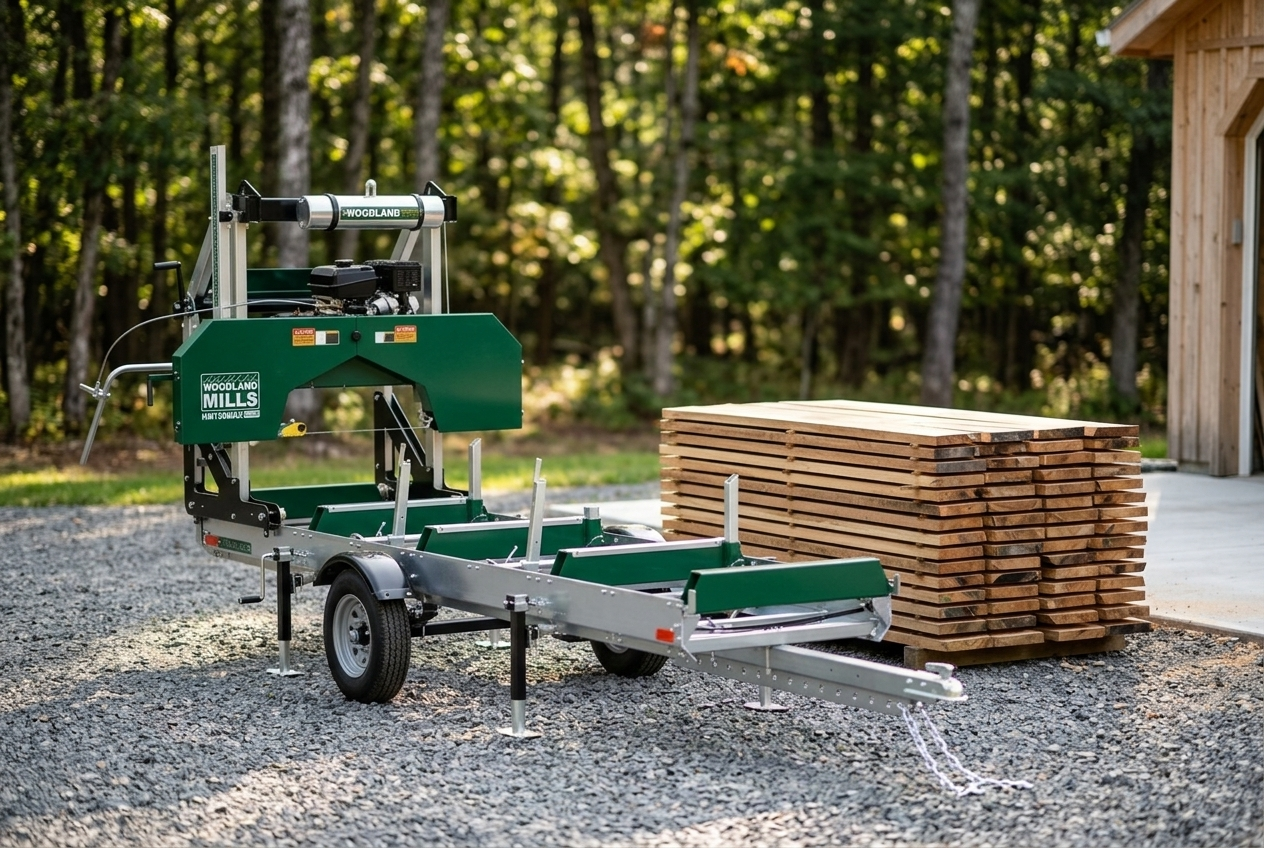
For most buyers, the best portable sawmill for the money is the Woodland Mills HM130MAX (around $7,800) — it gives you a 30-inch log capacity and a genuinely wide 30-inch cut for well under half the price of a comparable Wood-Mizer. But “best for the money” depends on your budget and how hard you’ll run the mill, so below we rank real picks from a $323 chainsaw mill all the way to a $36,000 hydraulic production machine — with current mid-2026 prices on every one.
The Cut Side may earn a commission from some links in this article, at no additional cost to you. We only recommend mills we’d put our own money into.
We run a Wood-Mizer LT15 on upper-Midwest hardwoods, and we’ve spent enough time around other operators’ machines to know that the “best” mill on paper is often not the best value in the shop. What follows is the ladder we’d actually shop, tier by tier.
Quick Answer: The best portable sawmill for the money is the Woodland Mills HM130MAX (~$7,800) for overall value, with the HM126 (~$3,100) as the cheapest real bandsaw mill worth owning. Serious hobbyists get the most mill per dollar between $3,000 and $8,000; the Wood-Mizer LT15 (~$7,900+) is the benchmark manual mill.
Last Updated: July 2026 · By Jason Lewis, who mills upper-Midwest hardwoods on a Wood-Mizer LT15 at The Cut Side. These picks reflect what holds up in the cut, not just paper specs.
Best Portable Sawmills for the Money at a Glance
| Pick | Model | Price (base, mid-2026) | Max log dia. | Cut width | Manual/Hydraulic |
|---|---|---|---|---|---|
| Best overall value | Woodland Mills HM130MAX | ~$7,800 | 30″ | 30″ | Manual |
| Best cheapest real mill | Woodland Mills HM126 | ~$3,100 | 26″ | 24″ | Manual |
| Best entry from a major brand | Frontier OS27 | ~$4,100 | 27″ | 22″ | Manual |
| Best benchmark manual | Wood-Mizer LT15 | ~$7,900–$12,000 | 28″ | 26″ | Manual |
| Best big-log capacity | Norwood LumberPro HD36V2 | from ~$10,800 | 36″ | 31″ | Manual, hydraulic-capable |
| Best production/hydraulic | Wood-Mizer LT35 / LT40 | ~$30,000 / ~$36,000+ | 32″ / 41″ | 26″ / 34.5″ | Hydraulic |
| Best sub-$400 entry | Granberg Alaskan MKIV | ~$323 | Bar-limited | ~26″ | Manual (chainsaw) |
Prices are base configurations captured in mid-2026 and shift with sales and options — confirm the current number on the manufacturer’s page before you buy. Now the details.
Best Overall Value: Woodland Mills HM130MAX (~$7,800)
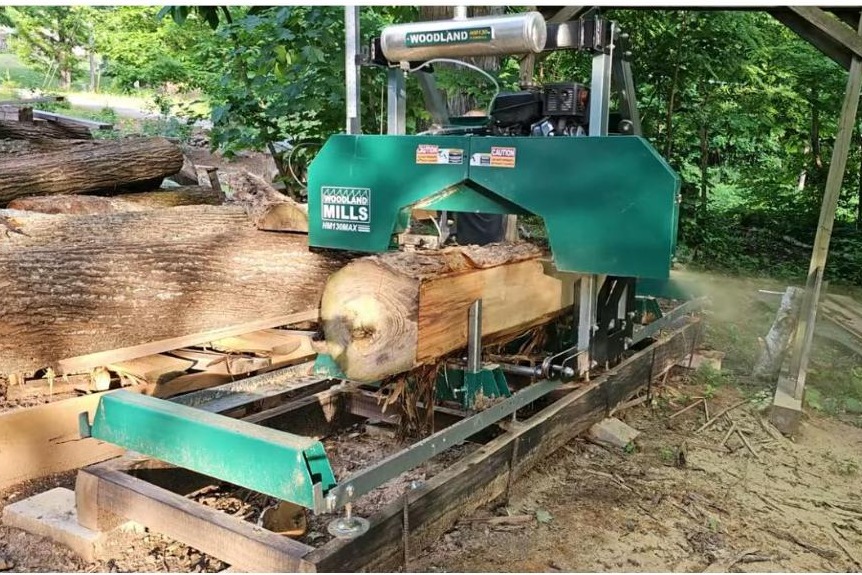
If we were spending our own money on one mill for serious hobby-to-part-time use, this is it. The Woodland Mills HM130MAX handles a 30-inch log and — this is the part that matters — makes a full 30-inch cut, which is wider than mills costing twice as much. It runs a 14 HP electric-start Kohler, a four-post carriage for cut accuracy, and Woodland’s “Gas & Go” auto-lube system. Woodland sells consumer-direct with online pricing, so there’s no dealer dance.
Pros: the widest cut in its price class, strong owner reputation, and electric start so you’re not yanking a recoil all day. Cons: it’s still manual log handling, so you’re rolling and turning logs yourself. For the money, nothing in the entry-to-mid range matches its capacity-per-dollar. This is the mill we point most first-time buyers toward.
Best Cheapest Real Mill: Woodland Mills HM126 (~$3,100)
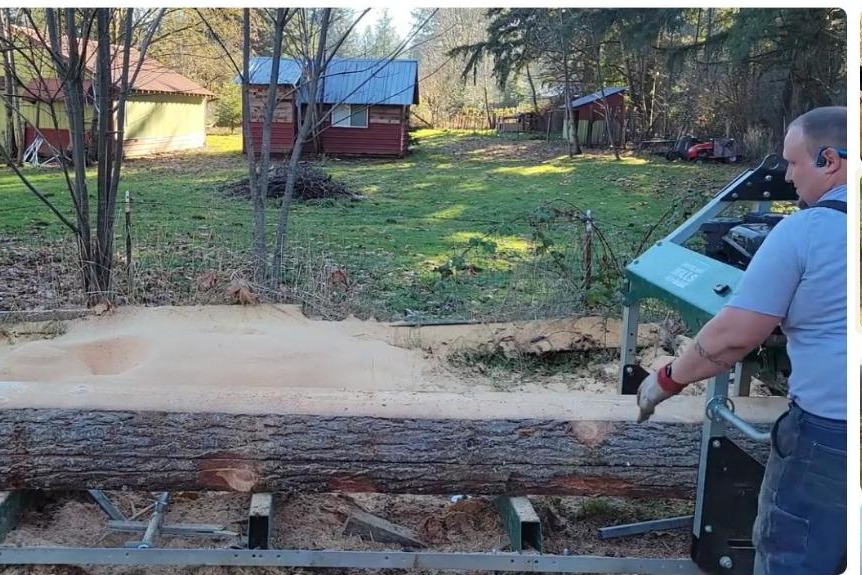
The HM126 is the cheapest machine on this list we’d actually call a real bandsaw mill — not an import gamble. Around $3,100 buys a 26-inch log capacity, a 24-inch cut, and a choice of 9.5 or 14 HP Kohler engines with an auto-locking sawhead. It’s the natural first mill for someone milling their own lumber a few weekends a month.
Pros: genuine bandmill quality at chainsaw-mill-adjacent money, gas-and-go clutch, trusted brand. Cons: narrower cut and manual handling. If your budget tops out around $3,000 and you want a mill you won’t have to apologize for, start here.
Best Entry From a Major Brand: Frontier OS27 (~$4,100)
Frontier is Wood-Mizer’s value-branded line, and the OS27 is the sweet spot: about $4,100 for a 27-inch log capacity and a 13.5 HP Briggs engine, sold consumer-direct with published pricing. You get the backing of the Wood-Mizer parts-and-blade network at a price that undercuts the LT15.
Pros: low price for the capacity, major-brand support. Cons: 22-inch cut is a touch narrow, and it’s manual only. If you want brand backing without the Wood-Mizer premium, the OS27 (or the bigger OS31 at ~$5,300) is a smart buy.
Best Benchmark Manual: Wood-Mizer LT15 (~$7,900–$12,000)
The Wood-Mizer LT15 is the mill everything else gets compared to — and it’s what we run at The Cut Side. The family starts around $7,900 for the base and climbs toward $12,000 depending on width and engine, handling a 28-inch log and a 26-inch cut, with gas, diesel, or electric options and an optional powered head feed.
Pros: rock-solid reputation, the best dealer and blade network in the business, and enough configurability to grow with you. Cons: you pay a brand premium — a Woodland or Frontier delivers similar manual capability for less. We’d only steer you here over the Woodland if the dealer network and resale value matter to you, which for a lot of long-haul owners they genuinely do.
Best Big-Log Capacity: Norwood LumberPro HD36V2 (from ~$10,800)
Need to swallow bigger logs without jumping to a production mill? The Norwood LumberPro HD36V2 handles a full 36-inch log and 31-inch cut starting around $10,800, with engine options up to a 27 HP Honda EFI and an upgrade path to add hydraulics later. It ships knocked-down, so plan on some assembly.
Pros: the biggest log capacity in the manual tier, a modular design you can add hydraulics to as your work grows. Cons: self-assembly, and a full hydraulics package pushes the price up meaningfully. For an operator whose logs keep getting bigger, the HD36V2’s headroom is the value story.
Best Production / Hydraulic: Wood-Mizer LT35 & LT40 (~$30,000–$43,000+)
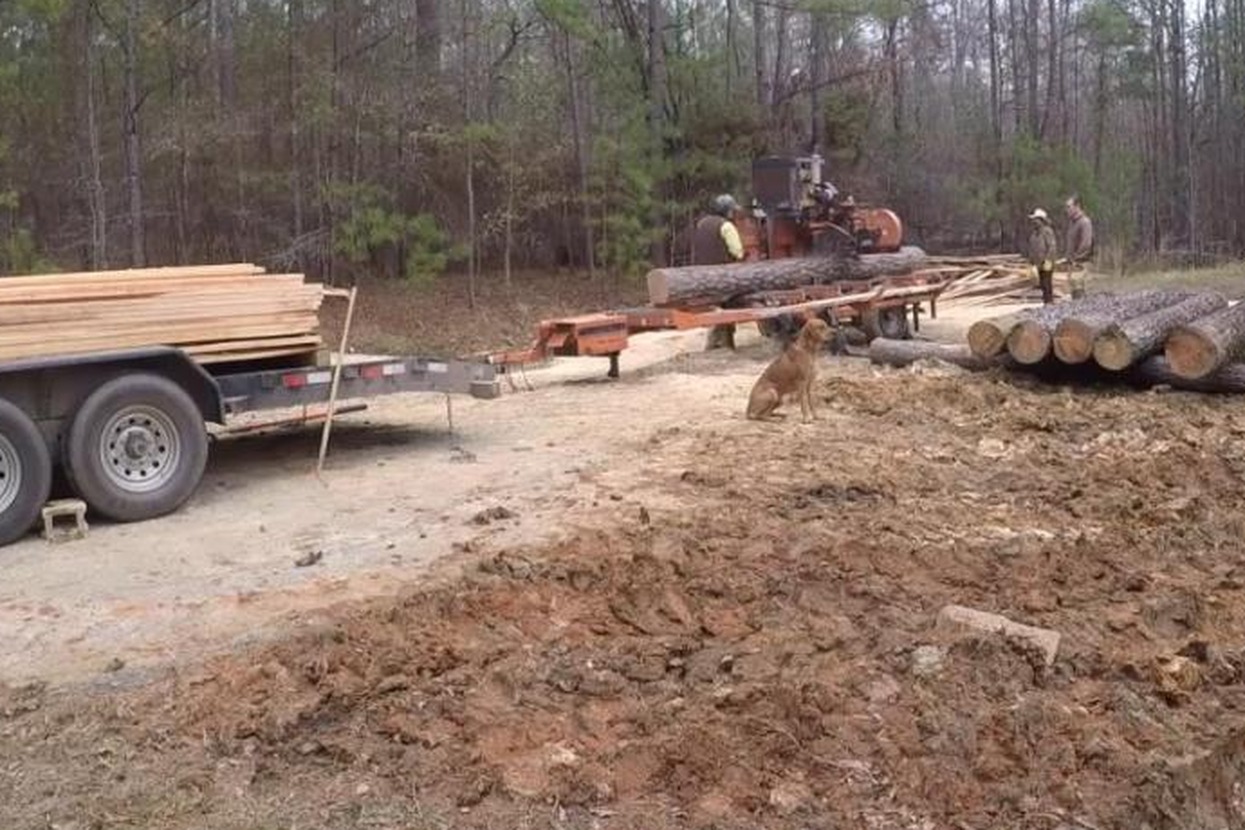
When milling is the job, hydraulics stop being a luxury. The Wood-Mizer LT35 is the entry to true hydraulic production at around $30,000 — powered log handling, a powered head, and setworks that roughly double what one person can cut in a day. Step up to the LT40 Hydraulic (from about $36,000) and you’ve got the industry-standard production mill, cutting a 41-inch log and holding its resale value better than almost anything else.
Pros: throughput, durability, resale, and full factory support. Cons: a $30,000–$40,000 entry point that only pays off if you’re cutting volume. If you’re booking paid jobs week in and week out, this is where “for the money” means money you make back.
Best Sub-$400 Entry: Granberg Alaskan MKIV (~$323)
Not ready to spend thousands? The Granberg Alaskan MKIV chainsaw mill is the cheapest legitimate way to make lumber — about $323 for the 30-inch jig, which clamps to a chainsaw you probably already own (60cc-plus, running a ripping chain). It’s slow and wastes more wood, but for occasional slabs or that one giant log, it’s unbeatable on price.
Pros: cheapest entry to milling, truly portable, USA-made. Cons: slow, physically demanding, wide kerf. Plenty of good sawyers start here — our Alaskan chainsaw mill setup guide walks through getting a clean first cut, and our best chainsaws for milling lumber roundup covers the powerhead to pair with it.
A Few More Worth a Look
The picks above are our core ladder, but three more mills come up often and deserve a mention:
- Timbery M100 (~$3,250): Wood-Mizer’s budget sub-brand, backed by the same blade-and-parts network, with a 26-inch log capacity. The catch is it’s dealer-only to order, so it’s less convenient than buying a Woodland direct. Good value if there’s a dealer near you.
- Frontier OS31 (~$5,300): the bigger sibling to the OS27, stepping up to a 31-inch log capacity and 23-inch cut. If you like the Frontier-by-Wood-Mizer value story but want more capacity, this is the pick.
- Norwood LumberMax HD38 (~$14,900 base): the biggest manual capacity here — a 38-inch log and 35-inch cut — with a modular path to add full hydraulics later. For an operator whose logs keep getting bigger, it’s a mill you won’t outgrow.
Manual vs. Hydraulic: Where Your Money Actually Goes
Here’s the thing that confuses most first-time buyers: a $10,000 manual mill and a $30,000 hydraulic mill cut the exact same lumber from the exact same log. You’re not paying for a better board — you’re paying for speed and your own back. Hydraulics power the log loading, turning, and clamping, roughly doubling how much one person can cut in a day and saving hours of physical labor.
So the “for the money” answer flips depending on the job. For a hobbyist or someone milling their own wood, every dollar is better spent on capacity and a strong engine than on hydraulics you’ll rarely need — a manual Woodland or Norwood is the value play. For someone booking paid jobs week in and week out, hydraulics pay for themselves in throughput, and a used or entry hydraulic Wood-Mizer becomes the smart money. Be honest about which one you are before you spend.
From experience (Jason): Before you spend the extra ~$1,100 to jump from the HM126 to the HM130MAX, go look at your actual log deck. The HM126 handles logs up to about 26 inches; the HM130MAX takes up to about 30. So the real question is how many true 30-inch-plus logs you have versus logs that are 26 inches and under. If a log is only wide at the butt flare, you can slab a couple of wedges off that butt to bring it into range — and on those narrower logs the 126 isn’t fighting the wood, so it cuts clean and pulls through efficiently. But if you honestly have a steady run of wide logs, the extra $1,100 for the HM130MAX pays for itself in cuts you’d otherwise be trimming down by hand.
How to Pick the Best One for Your Money
The mistake we see most is buying on price alone. A $1,600 import bandmill looks like a steal until you’re hunting for blades no one stocks. The better question is capacity-and-support per dollar. Three quick rules:
- Buy the capacity you’ll grow into, not just today’s logs. A 30-inch cut for a few hundred dollars more (the HM130MAX story) beats regretting a 24-inch limit later.
- Stay with brands that sell blades and parts direct. Woodland Mills, Norwood, Frontier, and Wood-Mizer all do. That support is worth more than a rock-bottom sticker price.
- Only pay for hydraulics when the work demands it. A manual mill cuts identical lumber; hydraulics buy speed and save your back. Match that to whether this is a hobby or a paycheck — the full breakdown is in our complete guide to portable sawmills.
Frequently Asked Questions
What is the best portable sawmill for the money?
For most buyers, the Woodland Mills HM130MAX at around $7,800 offers the best capacity-per-dollar, giving a 30-inch cut for well under half the price of a comparable Wood-Mizer. On a tighter budget, the Woodland Mills HM126 (~$3,100) is the best cheap real mill, and the Granberg Alaskan MKIV (~$323) is the cheapest way into milling of any kind.
How much does a good portable sawmill cost?
A quality entry bandsaw mill runs about $3,000 to $8,000, a mid-range manual mill roughly $9,000 to $18,000, and a professional hydraulic mill from about $30,000 to $40,000-plus. Chainsaw mills start around $300 for occasional use. See our full portable sawmill cost guide for the running costs too.
Are cheap import sawmills any good?
They can cut wood, but the risk is support: many import brands have no reliable blade or parts supply, which turns a bargain into a boat anchor when something wears out. For not much more, a Woodland Mills HM126 gives you a proven machine with direct parts backing. We’d only consider an import for the lightest occasional use.
Which portable sawmills are made in the USA?
Wood-Mizer and Frontier mills are US-built, and Granberg’s Alaskan mills are USA-made. Woodland Mills and Norwood are Canadian-founded brands popular across North America. American-built mills often hold resale value better, which matters if you may sell later.
Is it cheaper to mill your own lumber?
Over time, yes — if you have a log supply. Milling storm-damage, urban, or your own timber can turn firewood-bound logs into hundreds of dollars of lumber and slabs per tree, and the mill pays for itself as the board feet add up. The upfront machine cost is the hurdle; the per-board-foot cost after that is very low.
Our Recommendation
If you want one answer: the Woodland Mills HM130MAX is the best portable sawmill for the money for most serious hobbyists and part-time operators, full stop. Tighter budget, get the HM126. Bigger logs, the Norwood HD36V2. Making a living, step up to a hydraulic Wood-Mizer LT35 or LT40. Whatever tier you land in, buy the capacity you’ll grow into and stick with a brand that’ll sell you blades in five years.
Not sure which tier is yours yet? Our complete guide to portable sawmills walks through the manual-versus-hydraulic decision and the board-foot math behind it.
Written by Jason Lewis, a working sawyer who runs a Wood-Mizer LT15 and has milled on hobbyist and production mills alike.