
A portable sawmill costs anywhere from about $300 to over $50,000. Chainsaw mills run $200–$1,000, entry-level bandsaw mills $3,000–$8,000, mid-range manual mills roughly $9,000–$18,000, and professional hydraulic mills from about $30,000 to $55,000-plus. For a serious hobbyist, a capable bandsaw mill lands right around $3,000 to $8,000.
That’s the fast answer. But the sticker price is only part of what a mill actually costs you — blades, fuel, and maintenance keep spending after the purchase. We run a Wood-Mizer LT15 on upper-Midwest hardwoods at The Cut Side, so below is the real 2026 price map by tier, plus the ongoing costs most buyers forget and a straight look at whether a mill can pay for itself.
Quick Answer: A portable sawmill costs about $300 to over $50,000. Chainsaw mills run $200–$1,000, entry bandsaw mills $3,000–$8,000, mid-range manual mills $9,000–$18,000, and professional hydraulic mills $30,000–$55,000+. Plan to spend on blades, fuel, and maintenance on top of the purchase price.
Last Updated: July 2026 · By Jason Lewis, who runs a Wood-Mizer LT15 on upper-Midwest hardwoods at The Cut Side. The prices below are what these mills really cost to buy and run.
Portable Sawmill Cost by Price Tier (2026)
Portable sawmills sort cleanly into four tiers. Here’s the current landscape with real example models and mid-2026 base prices.
| Tier | Price range | Example models (base price) | Best for |
|---|---|---|---|
| Chainsaw mill | $200–$1,000 | Granberg Alaskan MKIV (~$323 jig; kits from ~$990) | Occasional slabs, lowest budget |
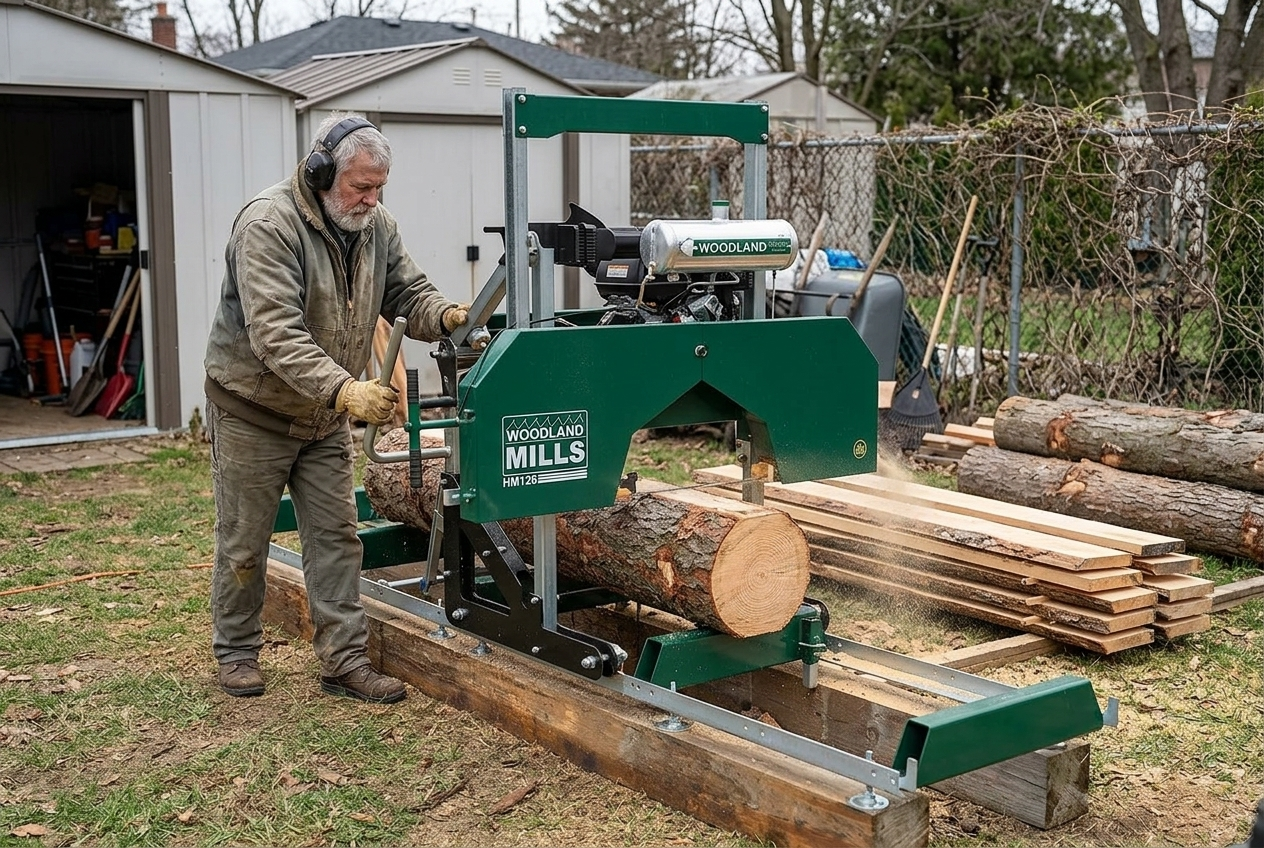
| Entry bandsaw | $3,000–$8,000 | Woodland Mills HM126 (~$3,100); Wood-Mizer LX series (from ~$3,200); Woodland HM130MAX (~$7,800) | Serious hobbyists |
| Mid-range manual | $9,000–$18,000 | Wood-Mizer LT15 (~$7,900 base to ~$12,000); Norwood LumberPro HD36V2 (from ~$10,800); Wood-Mizer LT28 (~$14,900) | Heavy hobby / part-time income |
| Professional / hydraulic | $30,000–$55,000+ | Wood-Mizer LT35 Hydraulic (~$30,000); LT40 Hydraulic (~$36,000); LT50 (~$54,000) | Full-time production |
Prices are base configurations captured in mid-2026 and move with sales and options. Add hydraulics, a bigger engine, or wider cut capacity and the number climbs — on a Norwood, for example, a full hydraulics package can add roughly $12,000 on top of the base price.
Tier 1: Chainsaw Mills — $200 to $1,000
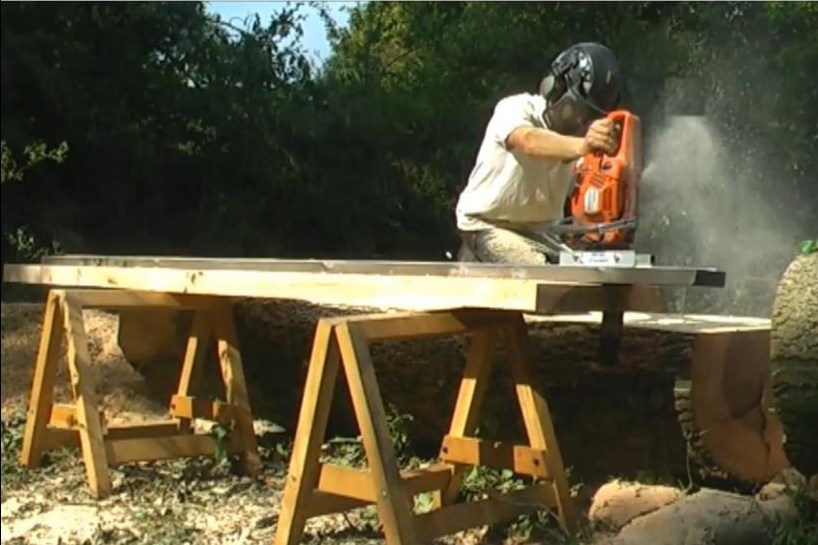
The cheapest way to make lumber. A chainsaw mill is a jig — like the Granberg Alaskan MKIV at about $323 for the 30-inch model — that clamps to a chainsaw you supply. Complete kits with longer bars start around $990. Remember the chainsaw itself is extra and needs to be a stout one (60cc-plus). It’s slow and wastes wood, but it’s unbeatable for occasional slabbing.
Tier 2: Entry Bandsaw Mills — $3,000 to $8,000
This is where most serious hobbyists land. Around $3,100 buys a Woodland Mills HM126 with a 26-inch log capacity; $7,800 gets the wider-cutting HM130MAX. Wood-Mizer’s LX line starts near $3,200. These are real, thin-kerf bandmills with direct parts support — the sweet spot for milling your own lumber.
Tier 3: Mid-Range Manual Mills — $9,000 to $18,000
More capacity and durability for heavy use or a few paid jobs. The Wood-Mizer LT15 family runs from about $7,900 base up toward $12,000 configured; the Norwood LumberPro HD36V2 starts around $10,800 and swallows a 36-inch log. Still manual handling, but built to run hard.
Tier 4: Professional / Hydraulic Mills — $30,000 to $55,000+
When milling is the job. A Wood-Mizer LT35 Hydraulic starts around $30,000 and an LT40 around $36,000, with powered log handling that roughly doubles daily output. Industrial units climb past $80,000. You only reach this tier when volume justifies it.
What Affects a Portable Sawmill’s Price?
Two mills with the same sticker tier can be thousands apart once you configure them. The big price drivers are, in rough order: hydraulics (the single largest jump — powered log handling can add $12,000 or more), engine size and type (a 27 HP EFI or a diesel costs well over a base gas engine), log diameter and cut-width capacity (bigger frames cost more), and brand and country of build (US-built, well-supported brands command a premium that pays back in parts availability and resale). A trailer package and blade-sharpening equipment add more still.
One more variable that’s easy to overlook: the chainsaw itself, if you go the chainsaw-mill route. The jig is cheap, but a mill-worthy saw isn’t — see our best chainsaws for milling lumber for what a proper powerhead costs and why a 60cc saw is the realistic minimum.
The Hidden Costs Beyond the Mill
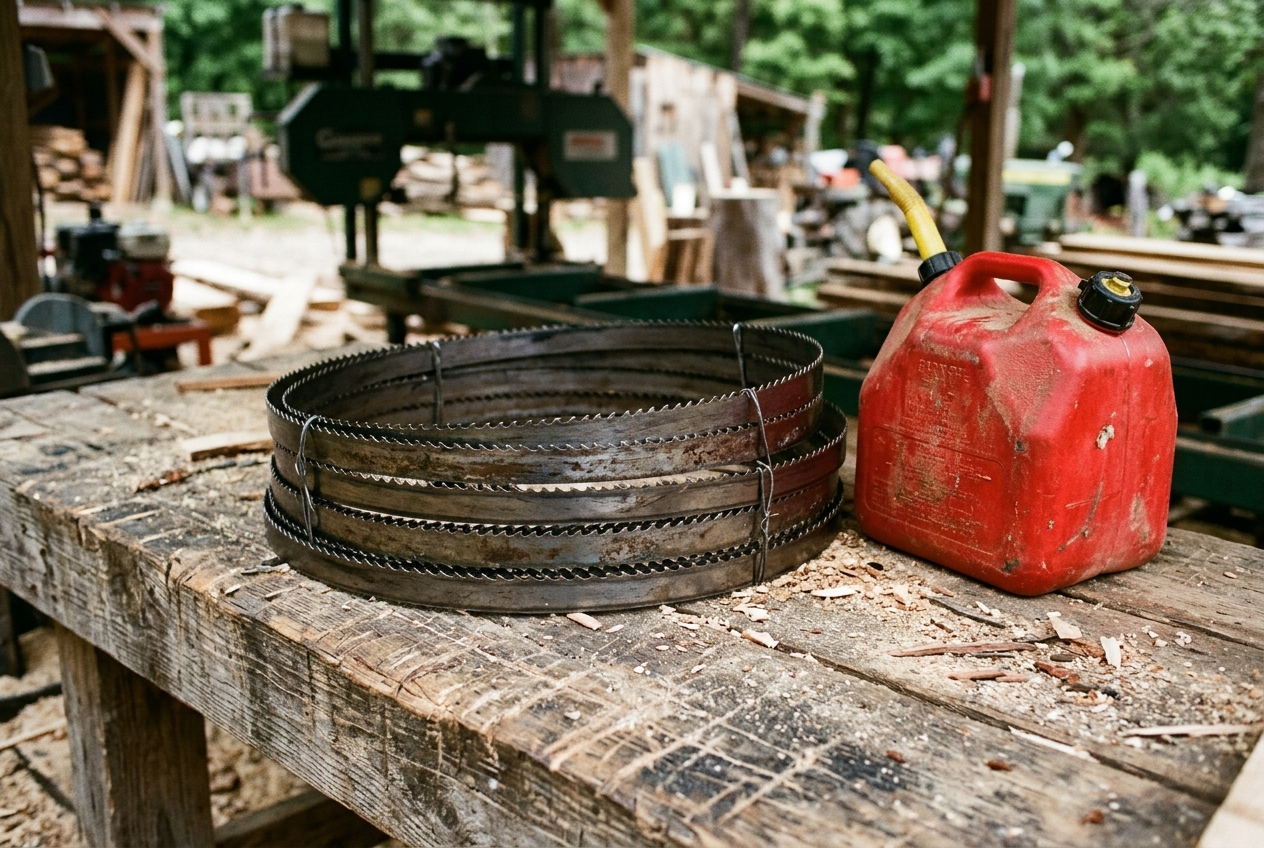
The purchase price isn’t the finish line. Here’s what a mill actually costs to run, and none of it is optional.
| Ongoing cost | Rough price | Notes |
|---|---|---|
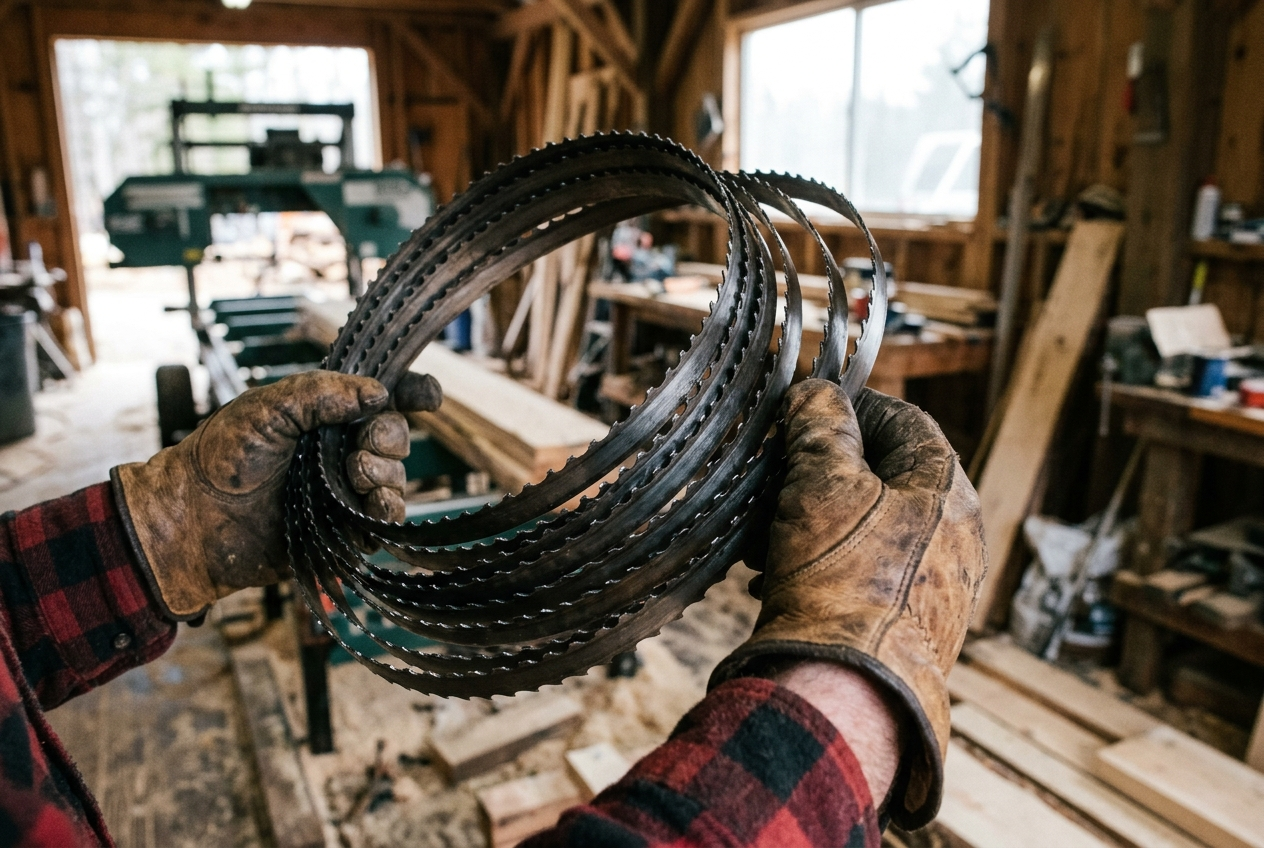
| Replacement bandsaw blades | ~$20–$30 each | Sharpen after ~2 hrs of cutting; resharpen up to ~5 times before disposal |
| Blade sharpening service | ~$8–$10/blade | Plus shipping if you send them out |
| Moisture meter | $25–$500 | ~$200 is plenty for a serious hobbyist |
| Fuel & bar/chain oil | Varies | Ongoing per hour of cutting |
| Trailer / transport | Varies | Only if you go mobile to customers |
| PPE (chaps, helmet, hearing) | One-time, budget for it | Non-negotiable safety gear |
The blade cost is the one new owners underestimate. Blades are consumables — you’ll swap and resharpen them constantly. At roughly $20 a blade and a two-hour cutting life before a touch-up, a busy day of milling is measured in blades, not just fuel. Budget for a stack of them.
From experience (Jason): The number that surprises new owners most is blades. A dull blade is a hard stop — you can’t push it, and if you try, your cut speed falls off or the blade starts diving and you get wavy boards. So you stop, swap it, and get back to work, which means you need sharp spares on-site at all times, not one blade you baby all day. But the bigger hidden cost isn’t the blade itself — it’s the downtime around everything: changing blades, topping off gas, rolling and turning logs, resetting for the next cut. Those minutes never show up on a price sheet, but they’re the real gap between the board feet per day a brochure promises and what you actually put on the stack.
Can a Portable Sawmill Pay for Itself?
Yes — operators commonly charge $0.25–$0.35 per board foot or about $45–$75 per hour for custom sawing, and milling your own storm or urban logs can turn firewood-bound trees into hundreds of dollars of lumber per log. Whether it pays off comes down to your log supply and how much you cut.
Two paths to payback: sell the service (mill other people’s logs at a per-board-foot or hourly rate), or sell the product (mill your own logs into lumber and slabs worth far more than the standing tree). Hourly billing tends to produce cleaner cuts because you’re not rushing; per-board-foot rewards speed, which is where hydraulics earn back their cost. Subtract blades, fuel, and your time, and a mill is a solid side income at the hobby tier and a real living once you’re tooled up for volume.
Frequently Asked Questions
How much does a portable sawmill cost?
Between about $300 and $55,000-plus depending on type and capacity. Chainsaw mills run $200–$1,000, entry bandsaw mills $3,000–$8,000, mid-range manual mills $9,000–$18,000, and professional hydraulic mills $30,000–$55,000-plus. Most serious hobbyists spend $3,000–$8,000.
How much does a Wood-Mizer sawmill cost?
Wood-Mizer’s lineup spans a wide range: the entry LX mills start around $3,200, the popular LT15 family runs from about $7,900 to $12,000, the LT28 is about $14,900, and hydraulic production mills like the LT35 and LT40 start around $30,000 and $36,000. Prices are for base configurations and change with options.
Is a portable sawmill worth it?
If you have a steady log supply — your own timber, storm damage, or urban trees — a mill can easily be worth it, turning logs headed for firewood into valuable lumber and slabs. The upfront cost is the hurdle; after that, your per-board-foot cost is very low. For someone with no log source, the math is harder.
What is the cheapest way to mill your own lumber?
A chainsaw mill like the Granberg Alaskan MKIV, at around $323 for the jig plus a chainsaw you likely already own. It’s the lowest-cost entry by far. The trade-off is speed and wood waste — a bandsaw mill costs more up front but cuts faster and wastes far less.
How long do sawmill blades last, and what do they cost?
Bandsaw mill blades run about $20–$30 each and want sharpening after roughly two hours of active cutting; a blade can typically be resharpened up to five times before it’s retired. Sharpening services charge around $8–$10 per blade. Blades are an ongoing consumable, so factor them into your running costs.
The Bottom Line
Plan on $3,000 to $8,000 for a capable entry bandsaw mill, and remember the machine is the start of the spending, not the end — blades, fuel, and a moisture meter come with it. Match the tier to how much you’ll actually cut, and if you have logs to feed it, a portable sawmill is one of the rare tools that can genuinely earn its keep.
Ready to shop specific machines? See our best portable sawmill for the money picks, or start with the complete guide to portable sawmills to nail down which type fits you.
Written by Jason Lewis, a working sawyer who runs a Wood-Mizer LT15 and has milled and priced lumber across every tier of portable mill.