
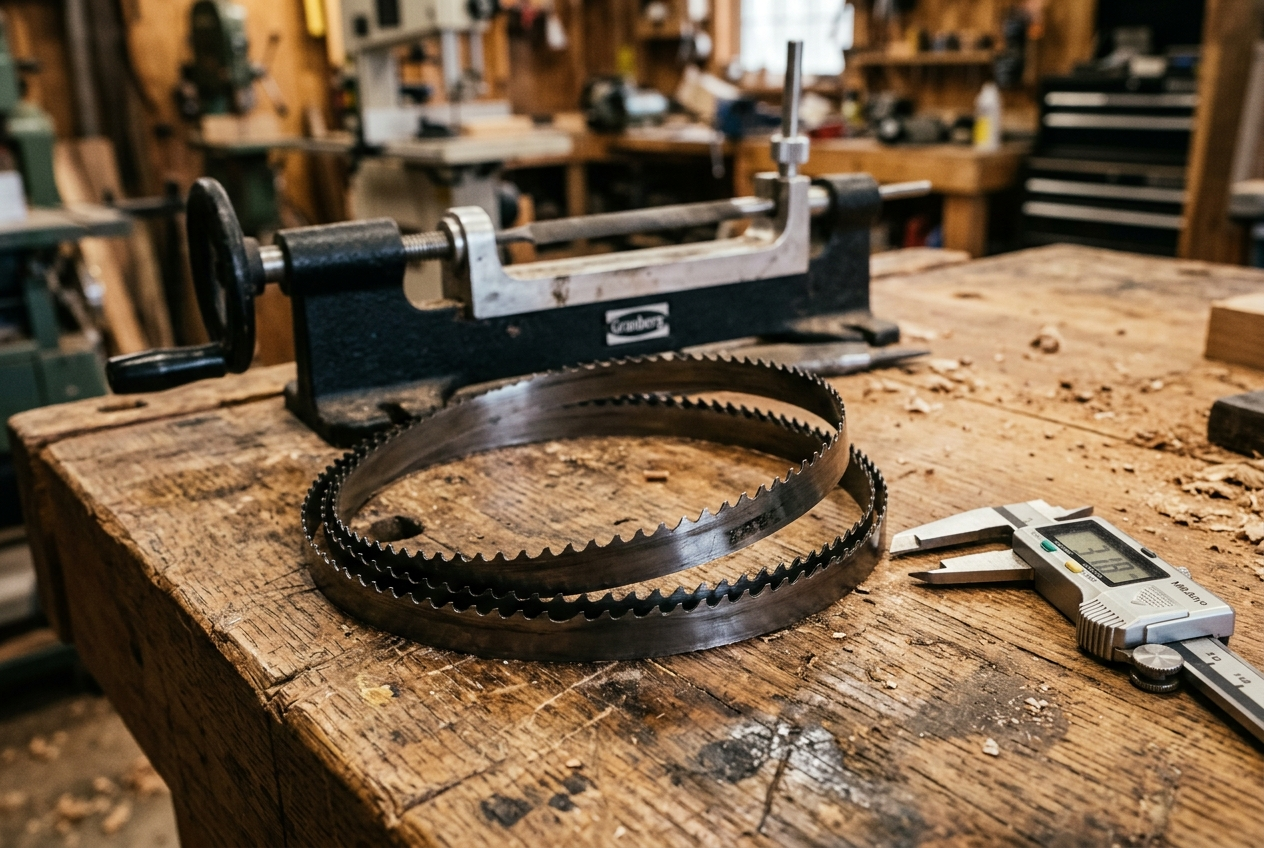
Quick Answer: A bandsaw mill blade should be swapped or sharpened after roughly 1.5–2 hours of actual cutting time — sooner in dirty or dry hardwood. A quality blade survives 4–6 sharpenings before retirement, and most cutting problems blamed on the mill trace back to a dull blade, wrong tooth set, or low tension. Keep three blades in rotation per sawing day and your cut quality problems mostly disappear.
A bandsaw mill blade is a thin, continuous loop of hardened steel — typically 1¼ to 1½ inches wide and around 0.042–0.045 inches thick — whose narrow kerf is the reason band mills waste less wood than circular mills.
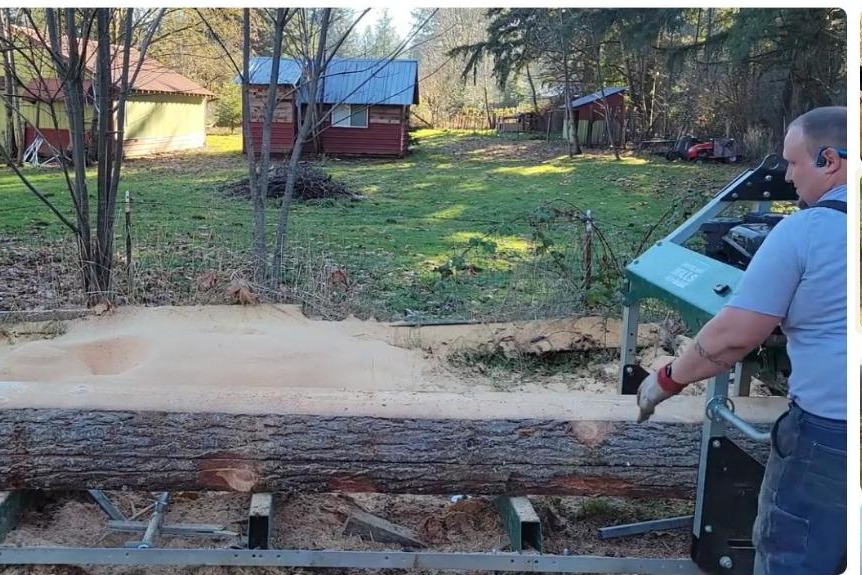
Ask any experienced sawyer what separates a good milling day from a miserable one and you’ll get the same answer: the blade. After ten-plus years feeding upper-Midwest oak, maple, and walnut through our Wood-Mizer LT15, I’ve learned that bandsaw mill blade maintenance, sharpening, and replacement isn’t a side chore — it IS the job. The saw is just the machine that carries the blade. This guide covers everything we’ve learned about choosing the right blade for the wood, keeping it sharp, tensioning it properly, and knowing when to sharpen versus when to spend the $30 on a fresh band.
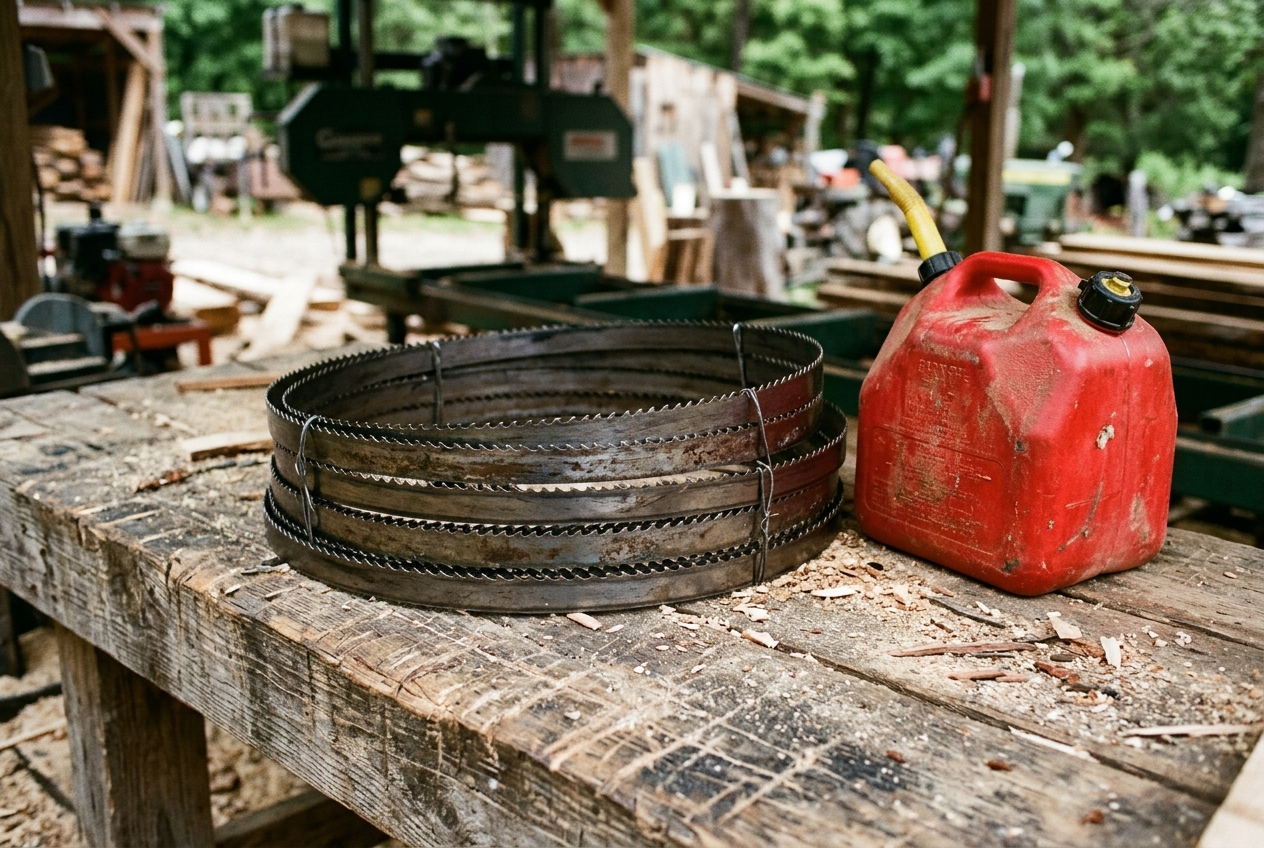
Last Updated: August 2026 | Jason Lewis has sharpened, tensioned, and retired blades on a Wood-Mizer LT15 through ten-plus years of upper-Midwest hardwood sawing.
Bandsaw Mill Blade Basics: What You’re Actually Buying
Most portable mills run a 1¼" or 1½" wide band in thicknesses from .042" to .055". Three numbers on the box matter more than the brand name: tooth pitch (spacing, usually 7/8" for general sawing), hook angle (how aggressively the tooth attacks — 4° to 13°), and set (how far teeth bend left and right to clear the kerf). Match those to your wood and your horsepower and almost any reputable blade cuts well; mismatch them and the best steel on earth cuts wavy.
Choosing the Right Blade for the Wood
This is the table I wish someone had handed us in year one. General guidance — adjust for your engine power and log condition:
| Wood / Condition | Hook Angle | Why |
|---|---|---|
| Softwoods (pine, spruce, fir) | 9°–13° | Aggressive hook self-feeds fast in soft, stringy fiber |
| Mixed / general hardwoods (oak, maple, ash) | 7°–10° | The all-around workhorse setup for most operators |
| Dense / dry hardwoods (hickory, hard maple, seasoned oak) | 4°–7° | Shallow hook keeps the blade from grabbing and diving |
| Frozen logs (winter milling) | 4°–7°, narrow set | Frozen wood machines like dense hardwood; aggressive hooks chatter |
| Abrasive/dirty logs (yard trees, skidded logs) | Any — use cheap carbon blades | Grit kills edges fast; save the premium bands for clean logs |
On steel: standard carbon blades ($25–$40) are the right answer for most operators. Bi-metal and carbide-tipped bands cost two to four times more and earn it only in high-volume or abrasive-wood operations. We run carbon blades on our mill and sharpen them ourselves — the economics below explain why.
When to Sharpen: Reading a Dulling Blade
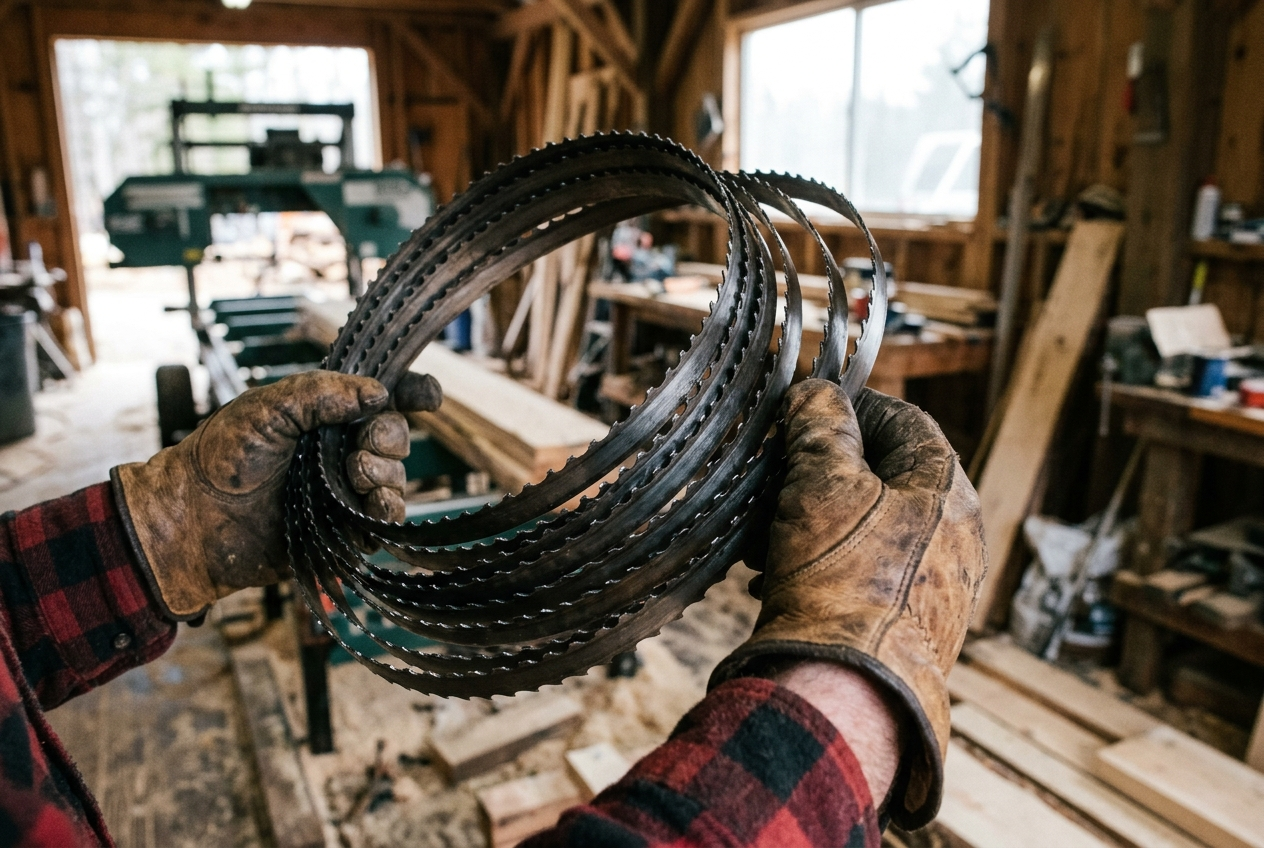
A blade never announces it’s dull; the lumber tells you. The signs in the order we usually see them: sawdust turns from coarse flakes to fine powder, feed rate slows for the same engine note, boards come off with a fuzzy surface, and finally the blade starts to wave or dive in the cut — especially through knots. If you’ve reached wavy cuts, you’re past due; our full breakdown of how to fix wavy cuts on a bandsaw mill covers that failure chain in detail. The operator rule that serves us best: change the blade at the first sign of doubt. A blade swap costs five minutes; a wavy cant costs a board or two of good lumber every pass.
Sharpening: Do It Yourself or Send It Out?
You have three options, and the right one depends on your volume:
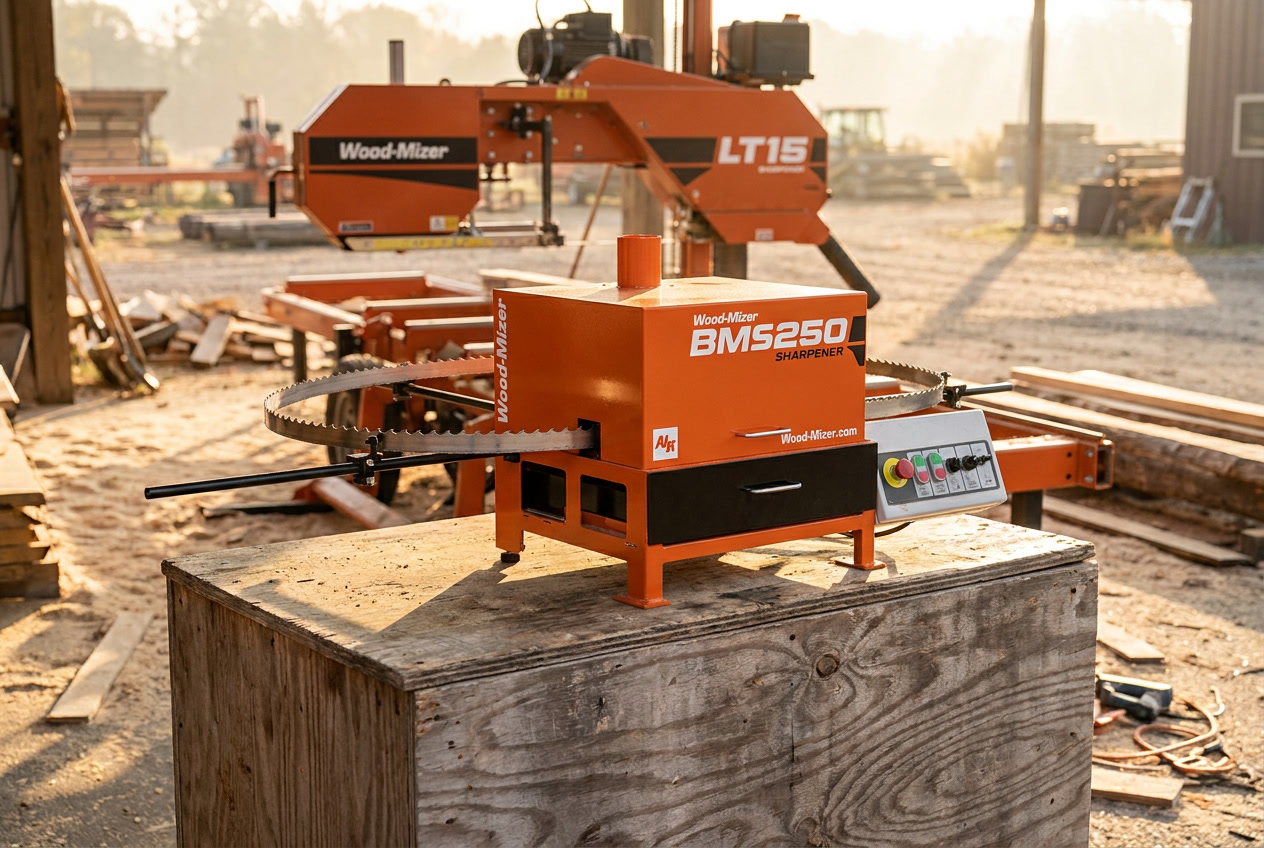
From experience: I looked hard at buying a sharpener, and it’s tough to swallow a machine that costs about as much as the mill. When I was running 20-plus hours a week, the math leaned toward owning one. Once my mill time dropped back, sending blades out 5–10 at a time just got easier. The best setup I’ve seen: buy one and put a family member on it — sharpening your blades plus blades from around the area pays it off a lot quicker.
- Sharpening service: Typically $8–$15 per blade plus shipping both ways. Zero equipment cost, professional results, but you’re without those blades for a week or more — so you need a deeper blade inventory.
- Manual sharpener or dremel-style jig: Cheap to start ($100–$300) but slow and easy to do unevenly. Fine for a hobbyist sawing occasionally.
- Automatic sharpener + tooth setter: $1,000–$2,500 for the pair (Wood-Mizer, Norwood, and Cook’s all sell them). At 10–15 minutes per blade with consistent geometry, this pays for itself somewhere around 100–150 blade sharpenings — a season or two for a busy mill.
Two rules regardless of method. First, sharpen before the blade is truly dead — a lightly dulled blade needs one light grind; a hammered one loses half its remaining life on the wheel. Second, check the set every sharpening. Teeth need roughly .020–.025" of set per side for most sawing; lost set is why a freshly sharpened blade still cuts hot and slow. A blade will generally take 4–6 sharpenings before the teeth are too short and it’s retirement time.
Blade Tension: The Silent Cut-Killer
Low tension makes even a sharp blade wander. Every manufacturer specs it differently — some mills have a tension gauge, others a spring-compression mark, others say tension until the blade deflects a certain amount mid-span. Use your manual’s number, not a forum guess, and recheck after the first few cuts as a new blade stretches and the bands warm up. Two habits that extend blade and bandwheel life: de-tension the blade at the end of every sawing day (leaving full tension overnight stresses blade, bearings, and belts), and give a brand-new blade a couple of gentle break-in cuts before you lean on the feed.
Blade Problems: Quick Cause-and-Fix Reference
| Symptom | Most Likely Cause | Fix |
|---|---|---|
| Wavy cuts | Dull blade or low tension | Swap blade first, then verify tension and guide alignment |
| Blade dives in knots | Too much hook angle for the wood | Move to a 4°–7° blade for dense/knotty logs |
| Fuzzy board surface | Dull teeth or lost set | Sharpen and re-set; check lube flow |
| Blade cracks/breaks early | Over-tension, worn wheel belts, or fatigue from storage kinks | Check tension spec, inspect belts, coil and store blades properly |
| Blade dulls in one log | Dirt, embedded grit, or metal in the log | Debark the entry path or pressure-wash logs; run a metal detector |
| Sawdust packs on blade | Pitch buildup, inadequate lube | Increase water/lube mix; add a squirt of dish soap |
Storage and Handling
Blades rust and blades remember kinks. Coil bands loosely in thirds, hang them off the ground in a dry spot, and wipe a light oil film on anything stored past a few weeks. Label sharpened versus dull — a marker dot on the band works — because every sawyer has installed a dead blade off the wrong nail at least once. And handle with gloves and eye protection when coiling: a 158" band under spring load uncoils with opinions of its own. Blade handling is also step one of general mill safety — our guide to staying safe with a chainsaw sawmill covers the PPE side in depth.
The Economics: What Blades Really Cost Per Board Foot
Run the numbers once and blade discipline becomes automatic. A $30 carbon blade that gets 5 sharpenings at $10 each delivers roughly 10–12 hours of sharp cutting for $80 all-in — call it $7–$8 per cutting hour. At a few hundred board feet per hour, blades cost you around 2–3 cents per board foot. That’s nothing — until you try to stretch a dull blade and it costs you a wavy-cut board worth a couple dollars every pass. Cheap blades sharpened often beat expensive blades run too long, every time. If you’re pricing out a whole operation, our guide to portable sawmill costs puts blades in context with the rest of the ownership math, and the complete portable sawmill guide covers how blade capacity differs across mill classes.
Frequently Asked Questions
How often should I sharpen my bandsaw mill blade?
After roughly 1.5–2 hours of actual cutting time in clean logs — sooner in dirty, dry, or dense wood. Don’t run to failure: swap the blade the moment sawdust goes powdery or the feed slows, and sharpen while the edge only needs a light grind.
How many times can a bandsaw blade be sharpened?
A quality carbon band typically takes 4–6 sharpenings before the tooth height is too short to hold set and edge. Blades that hit metal or get run dead-dull lose sharpenings off that lifespan.
What blade should I use for hardwood?
A 7°–10° hook angle handles most green hardwoods like oak and maple; drop to 4°–7° for dense, dry, or frozen wood. Aggressive 13° softwood blades grab and dive in hardwood knots.
Why do my blades keep breaking?
The usual suspects are over-tensioning, worn bandwheel belts letting the steel band flex over the wheel edge, and fatigue cracks from kinked storage. Check tension against your manual’s spec, inspect belts for grooves, and de-tension the mill at the end of each day.
How much do sawmill blades cost?
Standard carbon blades run $25–$40 each from major manufacturers, with 10-packs bringing the per-blade price down. Bi-metal and carbide-tipped bands run roughly two to four times more and only pay off for high-volume or abrasive sawing. Professional resharpening services typically charge $8–$15 per blade.
The Bottom Line
Blades are the whole ballgame in bandsaw milling: keep three or more in rotation, swap at the first sign of dulling, sharpen light and often, respect the tension spec, and de-tension every night. Do that and your mill will cut straight for decades — skip it and no amount of machine will save the lumber. Sharp steel makes good sawyers look great and dull steel makes great sawyers look lost.