
Search any sawyer forum and the same origin story repeats: a $130 knockoff off eBay that taught its owner more about soft bolts and cracked castings than it ever did about milling. If you’re shopping for a chainsaw mill right now, you’ve seen the same thing everyone sees: the Granberg Alaskan MKIV at around $330 for the 36-inch, and a wall of nearly identical-looking Chinese mills — Vevor, Carmyra, Holzfforma, SainSmart, and a dozen unbranded listings — for $100 to $150. This Granberg Alaskan mill review comes from the operator’s side of the log: I’m Jason Lewis — the Alaskan-style mill in our lineup is a Granberg, and most of what goes under it is older felled oak that has had time to dry, which is about the hardest duty you can hand a chainsaw mill.
Quick answer: the Granberg Alaskan MKIV is worth the extra $150–$200 for anyone who plans to mill more than a couple of logs. The cheap Chinese clones copy the geometry but not the metallurgy — soft fasteners, cast brackets that crack, and hardware that vibrates loose mid-cut. For a one-log experiment, a clone will limp through. For repeat milling, buy the Granberg once.
Last Updated: August 2026 | Jason Lewis runs a Granberg Alaskan mill on upper-Midwest hardwoods — mostly older felled oak that has had time to dry.
What You’re Actually Comparing
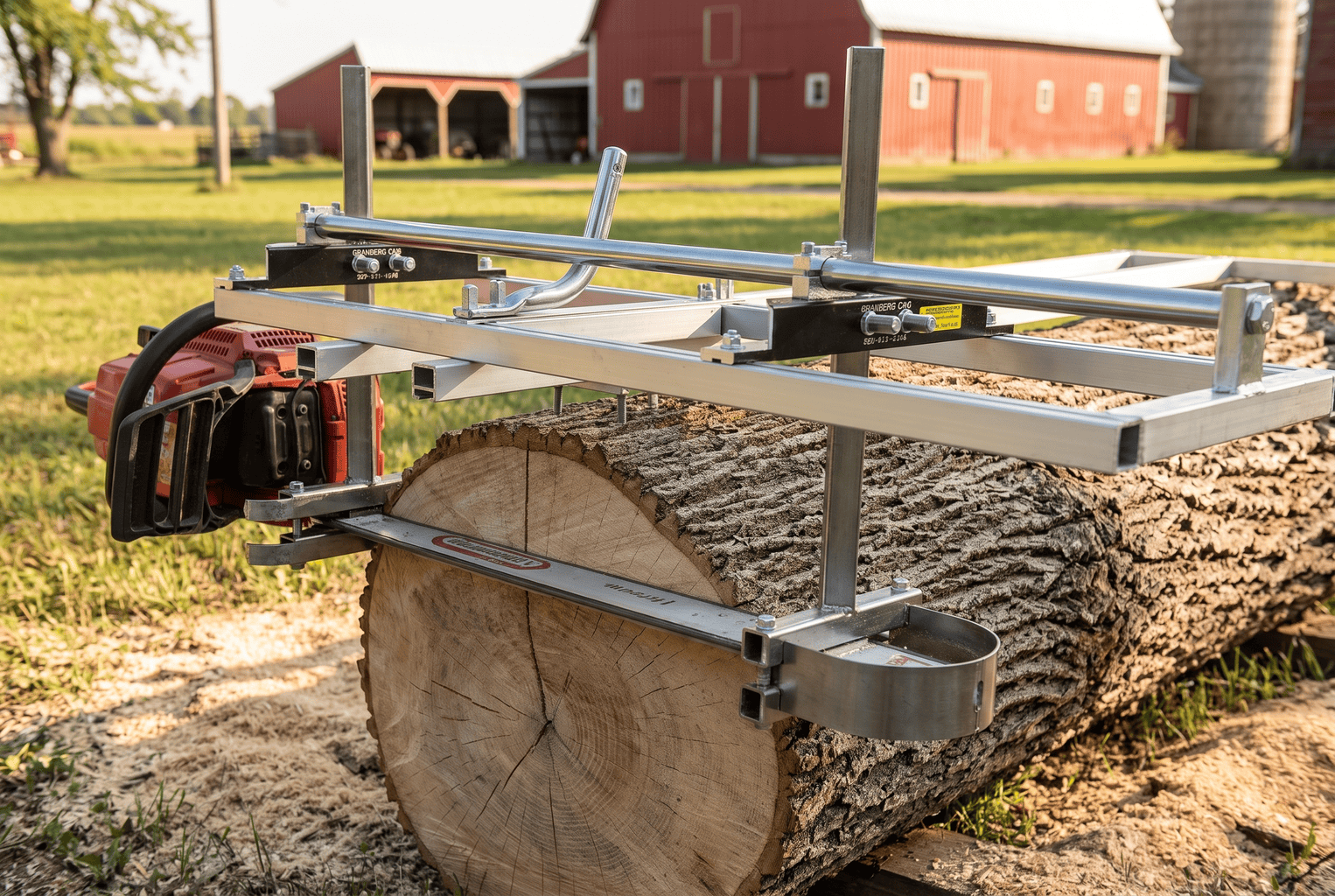
An Alaskan mill is a rail frame that clamps onto your chainsaw bar and rides across the top of the log, turning the saw into a horizontal slabber. Granberg International invented the design — the family-run company has been building them in Pittsburg, California for about 60 years, and the current Alaskan MKIV is the professional version of that original tool: billet aluminum extrusions, steel cross-bracing, and the newer machined end brackets that replaced the old cast-aluminum design. It clamps to the bar with no drilling and adjusts for slab thickness from about a half inch up to 13 inches.
The Chinese mills are direct copies of that layout. And to be fair, they copy it closely enough that the numbers on the listing look the same: a 36-inch clone clamps the same bar, opens to roughly the same width, and cuts the same log — on paper. Operators on the sawmill forums who’ve run both report the real difference shows up in the hardware store details, not the spec sheet. We cover where a chainsaw mill fits in the bigger milling picture in our complete chainsaw milling guide.
Granberg MKIV vs the Clones: Head to Head
| Granberg Alaskan MKIV | Chinese clone (Vevor / Carmyra / Holzfforma / unbranded) | |
|---|---|---|
| Price (36") | $330 direct from Granberg | $100–$150 on Amazon/eBay |
| Sizes | Eight, 24" ($304) to 84" ($575) | Usually 24" and 36" only |
| Frame | Billet aluminum extrusion, machined end brackets | Extruded aluminum, cast brackets on many units |
| Fasteners | Hardened, hold torque | Soft steel; u-bolts known to snap during assembly, often no lock washers |
| Instructions | Full manual + setup videos | A diagram, if that |
| Parts & support | Every spare part sold individually; phone support in California | Effectively none — you re-order the mill |
| Made in | USA (Pittsburg, CA) | China |
| Best for | Anyone milling more than a couple logs a year | One-off experiment on a tight budget |
One-line verdict: the clone saves you about $200 once; the Granberg saves you a ruined slab every time the cheap hardware would have shifted mid-cut.
Where the Cheap Mills Fall Short
Everything wrong with the clones is fixable with a hardware run — which tells you what you’re really buying. The consistent reports from owners come down to four things.
Soft fasteners. The u-bolts that clamp the rails are the classic failure: owners report snapping them at normal torque during first assembly. Others report a subtler failure: u-bolts that stretch instead of snapping, which is worse, because the mill slowly loses its setting over a cut and nobody knows until two slabs come off tapered a quarter inch nose to tail.
No lock washers. A chainsaw at milling RPM is a vibration machine. Clone mills routinely ship without lock washers, and bolts start backing out within the first tank of fuel. Experienced clone owners just replace every fastener with hardware-store Grade 5 and thread-locker before the first log — add $20 and an hour to that bargain price.
Cast brackets. Some clones still use cast-aluminum corner brackets like Granberg’s decades-old design, and cast aluminum cracks where billet bends. A cracked bracket mid-cut means the bar angle changes with the saw running — that’s a safety problem, not just a lumber problem.
No instructions, no parts. The standing joke on the forums is that clone buyers assemble their mill by watching Granberg’s videos. That works until something breaks, and then there’s no parts counter to call.
Where the Clones Are Honestly Fine
Now the part the Granberg marketing won’t tell you: if you have one storm-felled oak in the backyard and you want to find out whether milling is your thing before committing real money, a clone will get you slabs. The rail geometry is copied faithfully, the cut width is essentially the same — around 32–33 inches of usable width on a 36-inch unit once the clamps take their share of the bar — and plenty of forum members have run a rebuilt clone for years after swapping the hardware. If your total milling ambition is one log, spend the $100, replace the bolts, and enjoy it.
The math changes the moment milling becomes a habit. Repeatability is the whole game in lumber — every slab has to match the last one — and repeatability is exactly what soft hardware gives up first. It’s the same reason we tell people to buy the better bar and a proper ripping chain up front in our guide to the best chainsaws for milling lumber: the saw and mill are a system, and the cheapest link sets your lumber quality.
The Middle Ground: Holzfforma and the Better Clones
Not every import is a lottery ticket. Holzfforma — Farmertec’s house brand — sits a step above the unbranded listings: owners who’ve compared it directly against the Granberg report the fit and finish is closer than the price gap suggests, and the maximum cut width comes out about the same, roughly 33 inches with a bar long enough to support it. The same forum thread that says that also says the Holzfforma shipped with no real assembly instructions, just a rough diagram, and the buyer put it together by watching Granberg’s video. That’s the pattern with the better clones in one sentence: the aluminum has gotten good, the paperwork and the parts support haven’t.
Our take: if the choice is a $150 Holzfforma versus a $110 unbranded mill, the Holzfforma is the better gamble. But it’s still a gamble on hardware you should replace and support that doesn’t exist — so it narrows the gap with Granberg without closing it.
What Milling Day Looks Like with Each
The difference isn’t visible in the driveway — it shows up around the third slab. With the Granberg, our routine is: set thickness, check the four clamp points once, and cut until the fuel runs out. The setting we dial in on slab one is the setting on slab ten. Clone owners describe a fifth step in that routine: re-check every fastener between slabs, because at least one has walked. That’s two minutes a slab, which sounds like nothing until you remember milling a big oak is already an all-day job — and skipping that check is exactly how tapered slabs happen. A tool that needs supervising isn’t saving you money; it’s charging you in time and lumber instead of dollars.
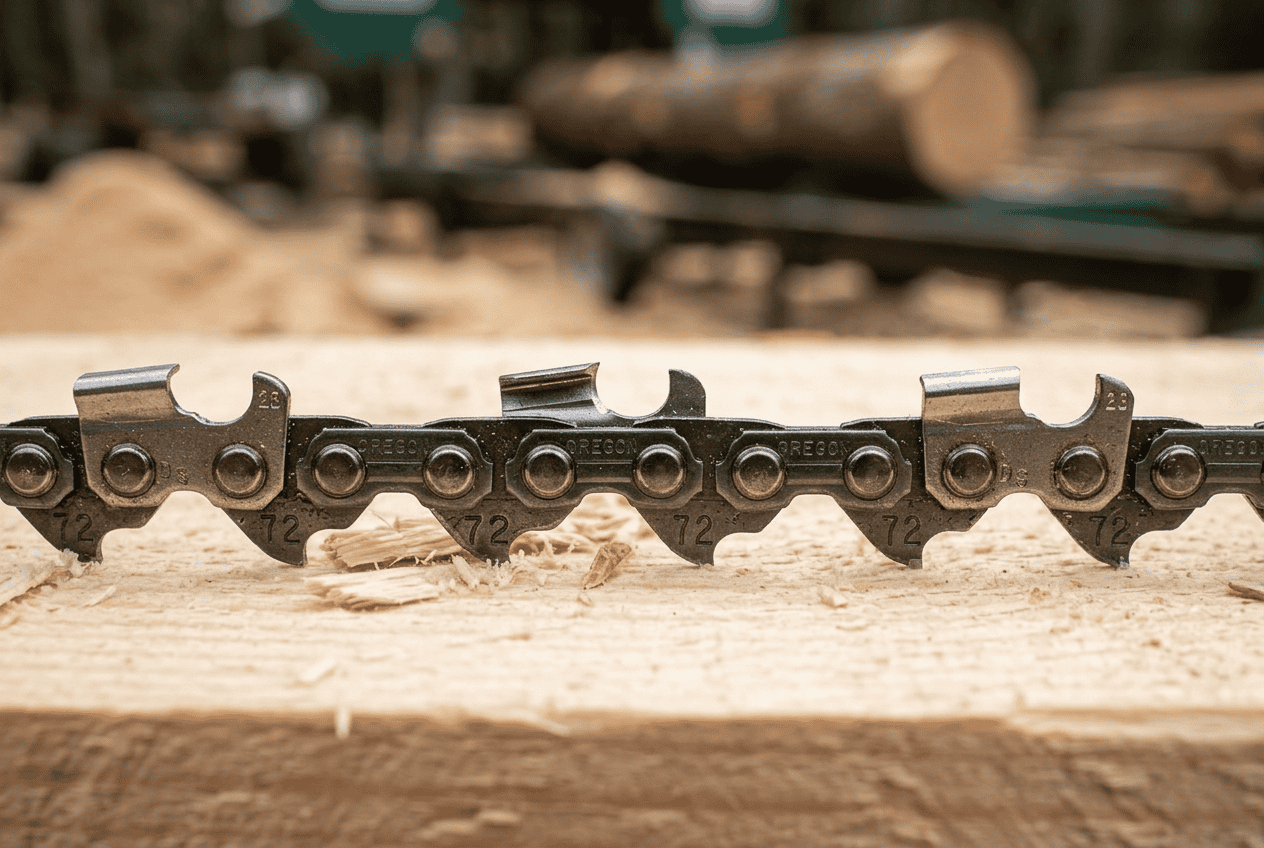
From experience: most of what goes under our Granberg is older felled oak that has had time to dry, and dry hardwood is brutal on a saw — the chain dulls fast enough that sharpening becomes part of the rhythm of the day. A proper ripping chain is the single biggest relief — Granberg’s own G7290 loop is the one to get, and this is the same chain on Amazon. Chains are sized to the bar: the loop linked here is the 24-inch (3/8 pitch, .050 gauge, 84 drive links), while a 36-inch bar takes the 114-drive-link version of the same chain — match pitch, gauge, and drive-link count to your bar before ordering. On longer bars an auxiliary oiler is worth a look too, because seasoned wood gives the bar none of the moisture green logs do.
The Real Cost Gap Is Smaller Than It Looks
Here’s what shoppers miss when they compare $130 against $330: the mill frame is the cheapest part of a chainsaw milling setup either way.
| Setup item | Typical cost | Same either way? |
|---|---|---|
| 70cc+ saw suitable for milling | $700–$1,400 (used to new) | Yes |
| Long bar (36") | $100–$200 | Yes |
| Ripping chain | $40–$70 | Yes |
| First-cut guide rails or ladder setup | $0–$200 | Yes |
| Mill frame | $330 Granberg vs $100–$150 clone | The only difference |
On a complete rig you’re arguing about roughly 15% of the total — and it’s the 15% that holds every other dollar in alignment. Price out a real gear list and the clone discount comes to less than a season’s worth of ripping chains. If the full budget picture matters to you, our breakdown of what a portable sawmill actually costs puts chainsaw mills in context against entry bandsaw mills, which start around $2,500 — a chainsaw mill setup is still the cheapest way into milling by a wide margin either way.
Who Should Buy Which
Buy the Granberg MKIV if: you’ll mill more than two or three logs, you’re selling or building with the lumber, you want a size beyond 36 inches (the clones mostly stop there; Granberg runs to 84 inches), or you just don’t want to re-engineer a new tool before using it. Setup is genuinely bolt-on — we walk the whole process in our Alaskan mill first-cut setup guide, and it applies to the MKIV exactly as written.
Buy a clone if: this is a one-log experiment, you’re comfortable replacing all the fasteners before first use, and you accept that a cracked bracket ends the project. Treat it as a $130 trial membership in milling — plenty of serious sawyers started exactly there.
Frequently Asked Questions
Is the Granberg Alaskan mill worth the extra money?
For repeat use, yes. The $150–$200 premium buys hardened fasteners, machined billet brackets, individually available spare parts, and a US phone number that answers. Those are exactly the things that keep slab thickness consistent cut after cut — which is the entire job of the mill frame.
Are the cheap Amazon and eBay chainsaw mills any good?
They’re usable after a rebuild. The geometry is a faithful copy, but experienced owners replace every bolt and add lock washers before the first log. Out of the box, snapped u-bolts and hardware backing out under vibration are the most commonly reported failures.
What size Granberg mill should I buy?
Match the mill to your bar, and expect to lose about four inches of bar length to the clamps. A 36-inch mill on a 36-inch bar yields roughly a 32-inch cut. The 36-inch MKIV ($330) is the sweet spot for most hardwood work; go bigger only if you have the saw to pull it.
Do the Chinese clone mills fit the same chainsaws?
Yes — both designs clamp to the bar itself, no drilling, so any saw that can run the bar can run the mill. The saw is the real constraint: milling wants 70cc or more regardless of whose frame is on the bar.
What else do I need besides the mill?
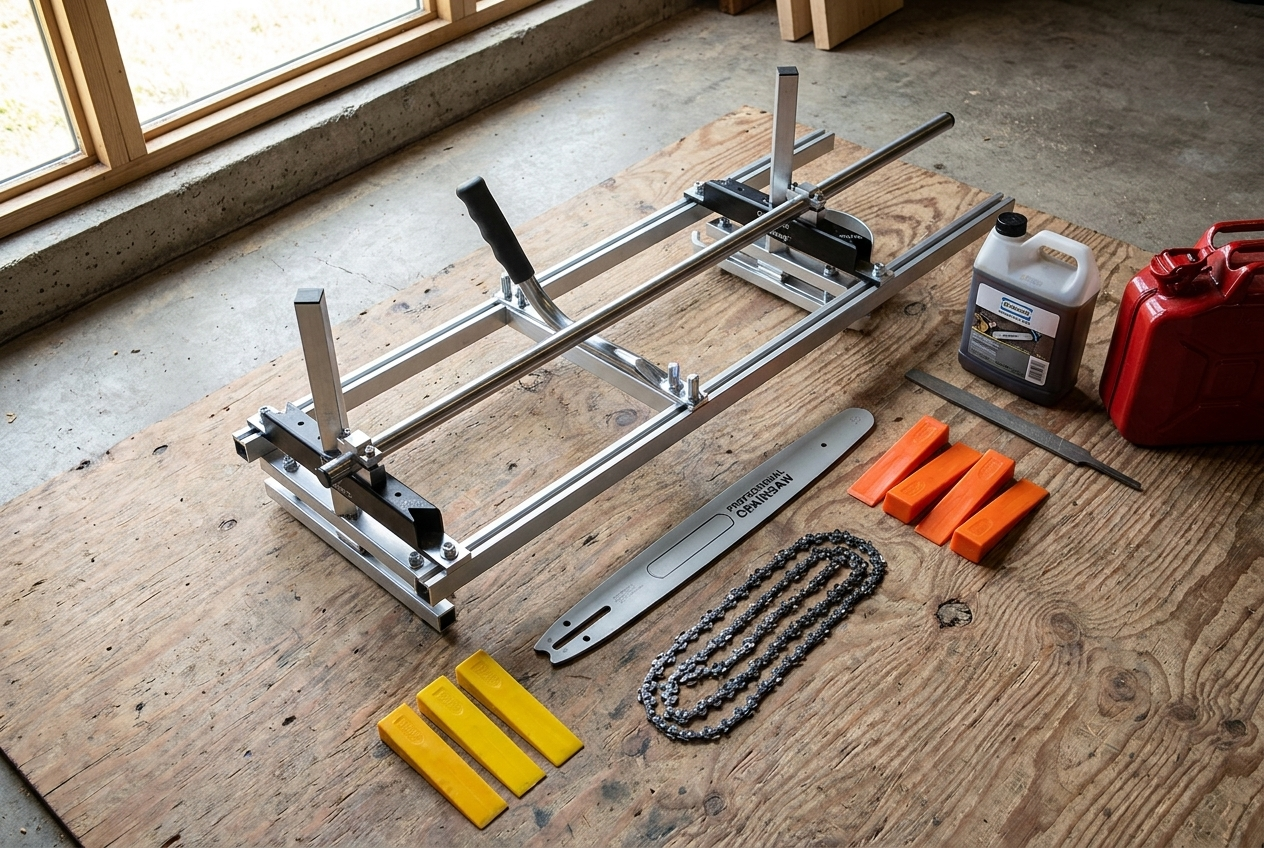
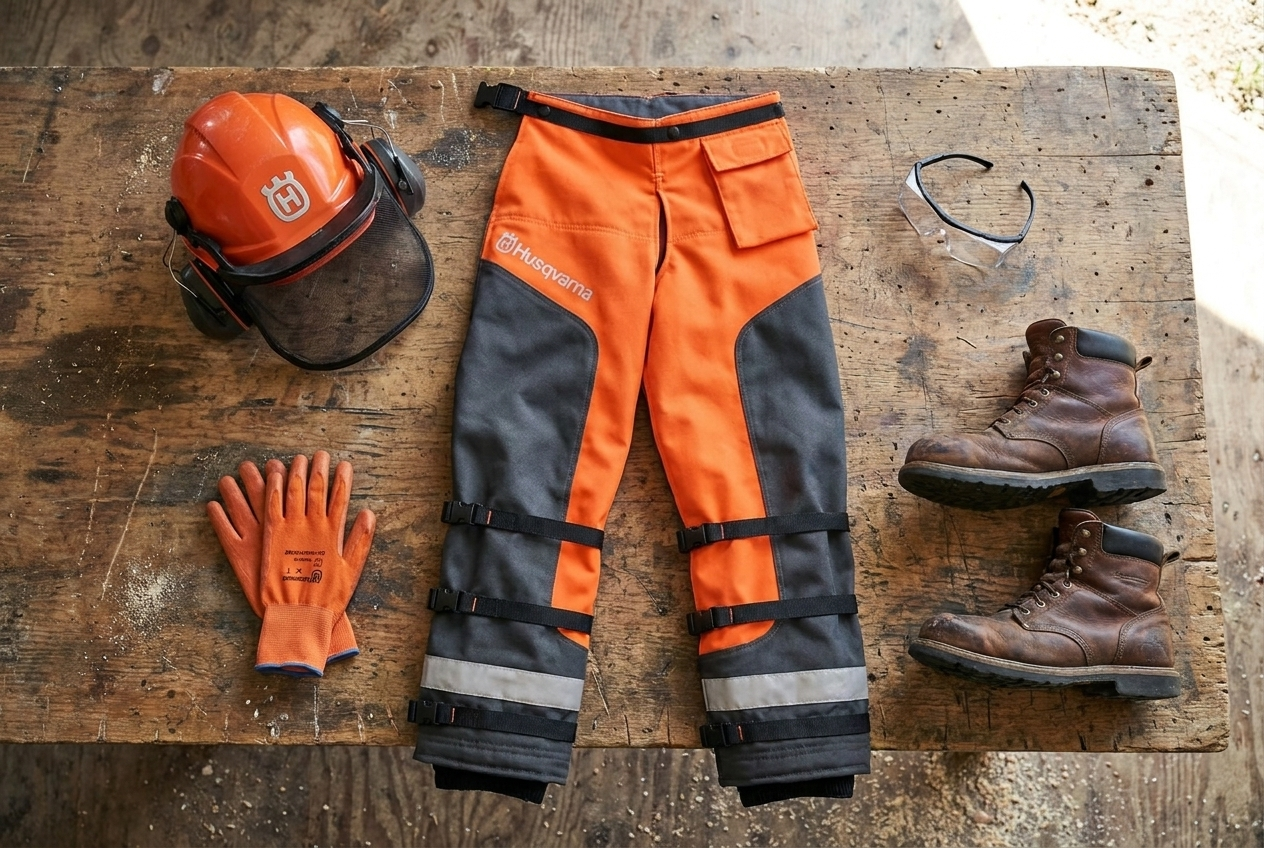
A ripping chain (the shallow-angle grind matters more than the mill brand), a guide system for the first flat cut, felling wedges to keep the kerf open — plastic, not steel, since the chain will eventually find one; a six-pack like this on Amazon runs about $16 and mixes 8-inch and 5.5-inch wedges, and the 8-inch is the one you want holding a long milling kerf — and full PPE. Budget for those before you upgrade anything else.
The Bottom Line
The clones prove Granberg got the design right — they copy everything except the parts you can’t see in a product photo. If milling is going to be part of how you work wood, the MKIV is the cheapest tool on your rig that you’ll never have to think about again. If you’re only curious, a clone plus a bag of Grade 5 bolts will tell you whether you love this. Either way, sharpen a real ripping chain, take the first cut slow, and check every fastener at every tank — that habit costs nothing and saves more slabs than any brand name.
Jason Lewis runs a Granberg Alaskan mill on upper-Midwest hardwoods — mostly older felled oak that has had time to dry.