
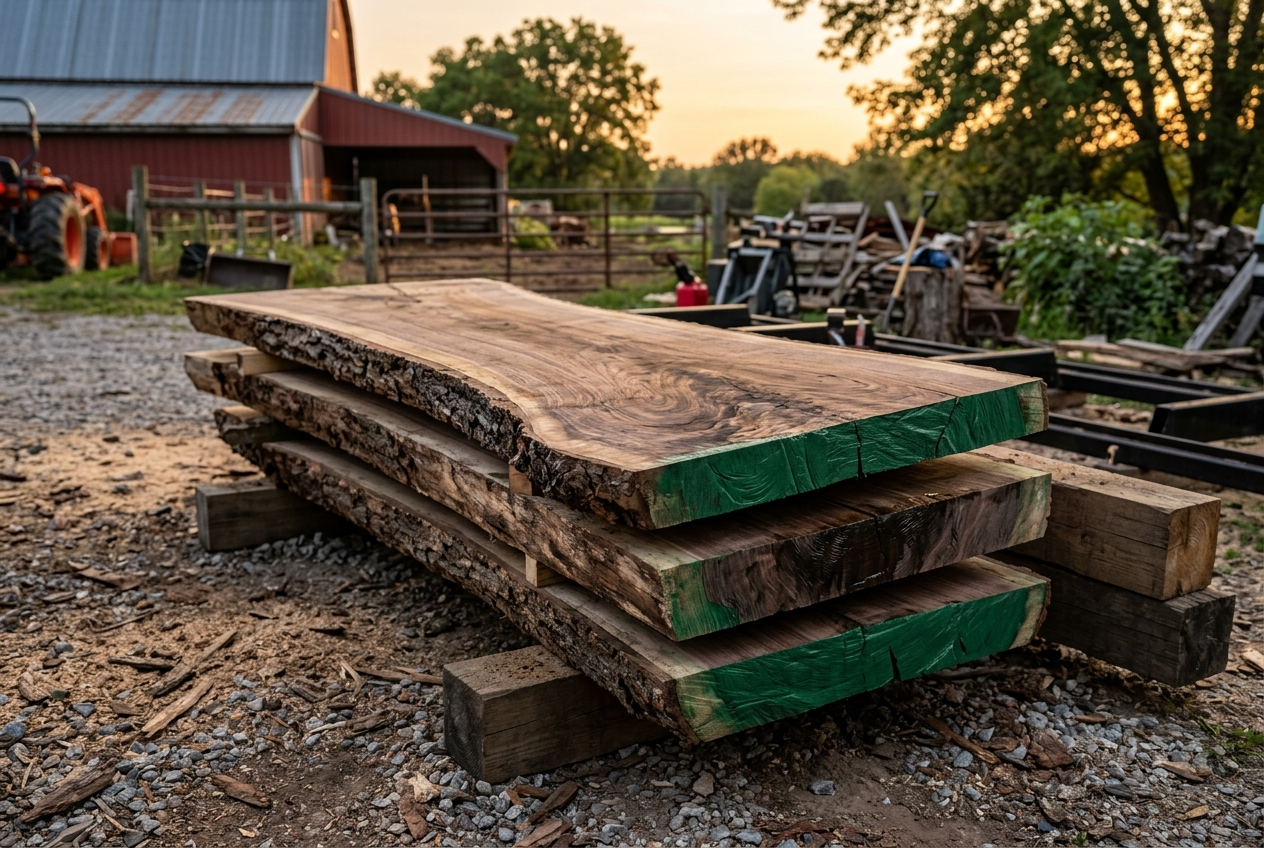
Quick Answer: To mill live edge slabs on a portable sawmill, pick a character log that fits your mill’s throat, clamp it dead solid, skip the squaring cuts entirely, and saw straight through the log at a consistent 8/4 to 12/4 thickness (2–3 inches), leaving the natural edge and bark intact on both sides. Seal the ends the same day, sticker the slabs in cut order, and plan on roughly a year per inch of air-drying before they’re furniture-ready.
A live edge slab is a thick, full-width cut of a log — usually 2 to 3 inches — with the natural edge and bark line left intact on both sides, sawn through-and-through rather than squared into boards.
The first walnut slab we ever pulled off our Wood-Mizer LT15 sold before it was dry — and that’s when live edge milling stopped being a novelty at our mill and became a line item. Slabs are the highest-value product a portable sawmill makes: the same log worth a few hundred dollars as boards can bring several times that as dried, book-matched slabs. But slabbing is its own technique, with different log choices, different mill setup, and different drying discipline than dimensional sawing. Here’s exactly how we do it, step by step.
Last Updated: August 2026 | Jason Lewis has milled and sold walnut, oak, and maple slabs off a Wood-Mizer LT15 for over a decade in the upper Midwest.
Step 1: Choose the Right Log
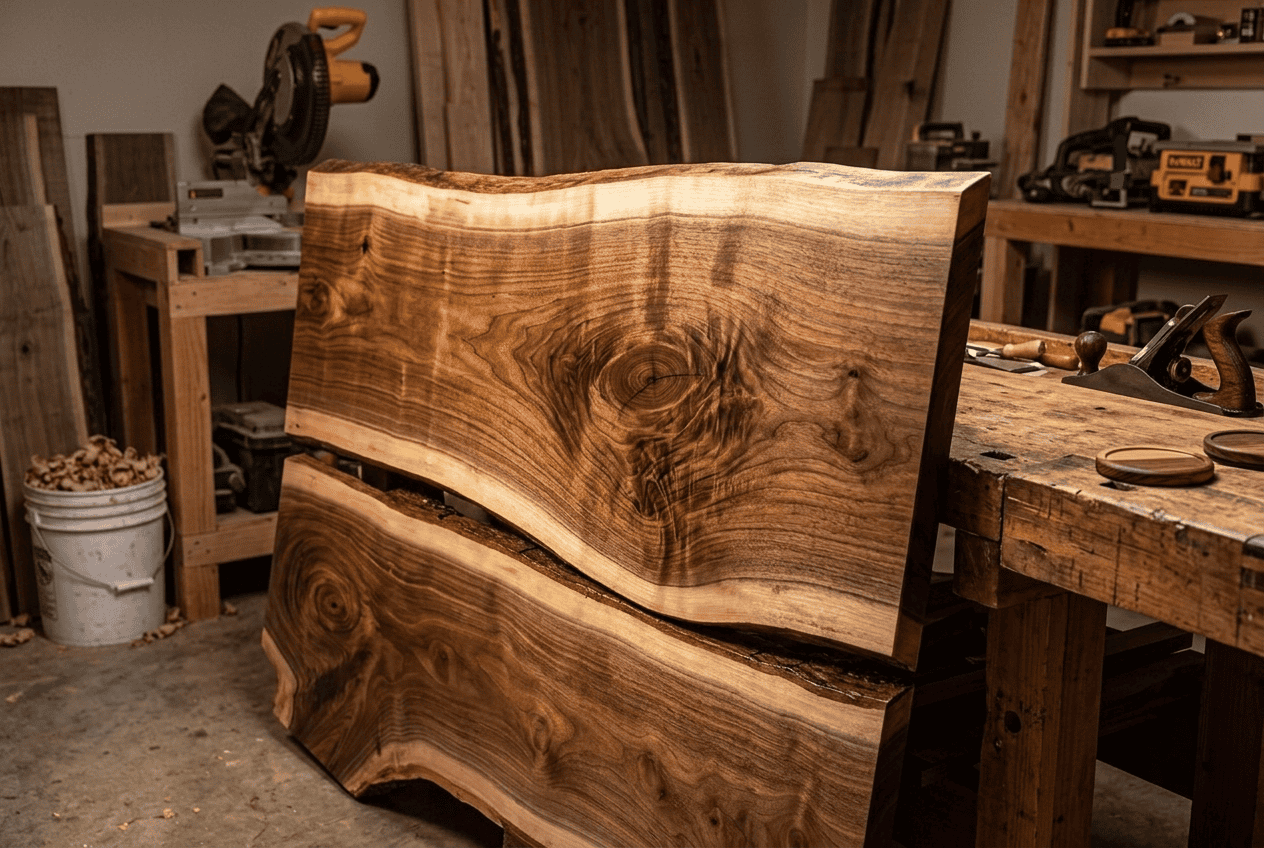
Slab value is in the figure, not the lumber grade. The defects a grade sawyer avoids — crotch figure, burls, wandering grain, even modest spalting — are exactly what a slab buyer pays for. Around our upper-Midwest yard the money species are black walnut (the king — dried slabs bring $10–$25+ per board foot), white and red oak, maple (especially ambrosia and spalted), cherry, and ash. Size the log to the machine: your usable slab width is your mill’s maximum throat, so a 30"-throat mill has no business fighting a 34" butt log. And avoid rot-soft centers — character is good, punk is firewood. If you’re still choosing a machine for slabbing, wide-throat models are compared in our best portable sawmill for the money guide.
Step 2: Set Up the Mill for Slabbing
Slabbing is through-and-through sawing — no rotating, no cant. That simplifies the day but raises the stakes on setup: every cut is a face cut on your most valuable wood. Clamp the log so it cannot rock (slab logs are often big, lumpy, and taper-heavy — use shims and toe boards to get the pith running parallel to the track), open the guide arm to full width, and put a fresh, properly tensioned blade on before the first cut. Wide cuts in hardwood are the hardest work a mill does; a half-dull blade that would limp through 6" boards will wave badly across a 24" face. Our blade guide covers the hook angles and tension habits that matter double here.
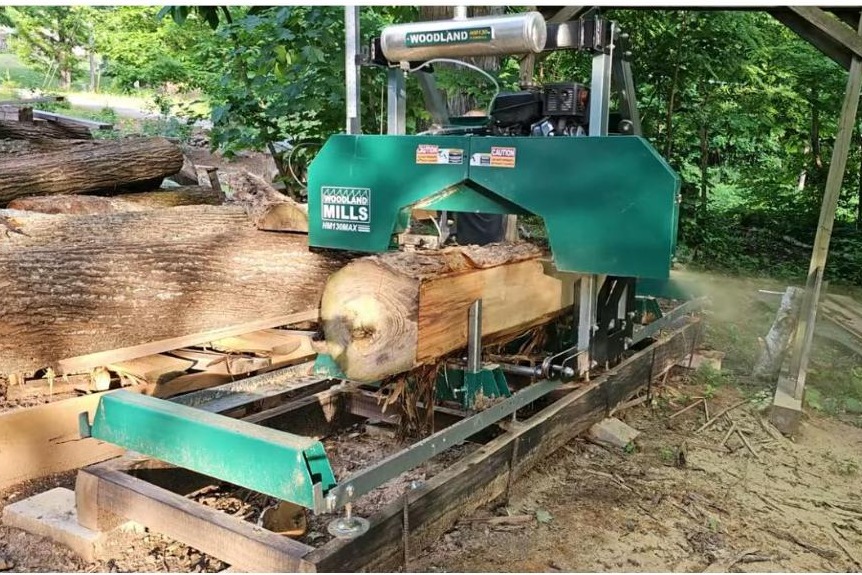
Step 3: Saw Through-and-Through
The sequence itself is simple:
- Take a top slab cut to remove the crown and open the first face.
- Decide slab thickness — 8/4 (2") for table tops is the commercial standard, 10/4–12/4 for big statement pieces, thicker for mantels and benches. Cut every slab in the log the same thickness unless a buyer ordered otherwise.
- Saw straight down through the log, slab after slab, letting each one rest in place or on the loader arms until you lift it off in order.
- Keep the slabs in cut sequence — consecutive slabs are book-matches, and matched pairs and sets sell for a premium over singles.
- Slow your feed through crotch figure and knots; that’s exactly where the money grain lives and exactly where blades want to dive.
Remember shrinkage: green slabs lose roughly 6–8% of width and thickness in drying, so an 8/4 target gets sawn a strong 2¼". A wavy pass on a slab isn’t a planer problem — flattening slabs is expensive work, so every sixteenth of consistency you saw now is money later.
Step 4: Seal the Ends the Same Day
End checking is the number-one killer of slab value, and it starts within hours on a warm day. Coat every slab end with a wax emulsion end sealer (Anchorseal 2 is the operator standard — a 1-gallon jug runs about $50 and covers a season of slabs) the day of milling — generously, past the end onto the face an inch. A $30 gallon of sealer protects thousands of dollars of slabs; skipping it invites cracks that run a foot into your best material.
Step 5: Sticker, Stack, and Wait
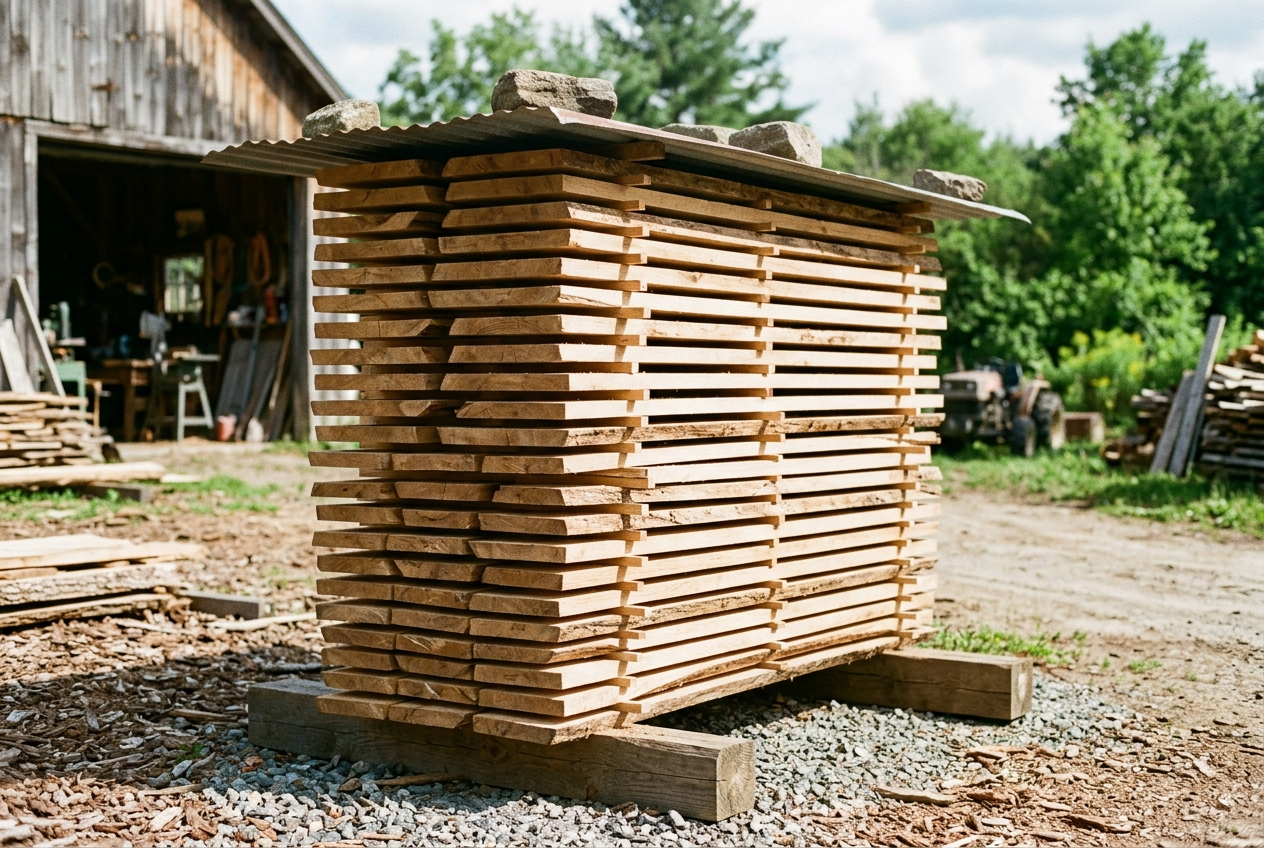
Slabs dry slow and they dry mean — thick hardwood full of tension and figure moves hard if the stack lets it. Stack slabs in cut order on dead-level bunks, stickers every 16–18" aligned vertically, and put serious weight on top of the pile — concrete blocks, steel, more slabs. The air-dry rule of thumb is about one year per inch of thickness, so an 8/4 walnut slab is a two-year hold before kiln finishing or sale as air-dried stock. Many slab sellers air-dry a year then pay for kiln time to finish to 6–8% moisture — kiln-dried is what most furniture buyers demand, and it kills any insects in the wood as a bonus. Track your inventory value while it dries with our board foot calculator — slabs are measured and sold by board foot just like lumber, only at much better prices.
Check progress with a moisture meter instead of guessing — a pinless unit like the General Tools MMD4E (reads 5–50% in wood, about $38) tells you when a slab has reached the 12–14% range buyers expect for air-dried stock.
What Slabs Are Worth (and Who Buys Them)
| Product | Typical Price (dried) | Buyer |
|---|---|---|
| Walnut slabs, 8/4, figured | $10–$25+/BF | Furniture makers, table builders |
| Oak / ash / maple slabs, 8/4 | $5–$12/BF | Hobbyists, bar/counter builders |
| Character slabs (spalted, ambrosia) | $6–$15/BF | Woodworkers, artists |
| Green slabs, air-dry started | Roughly half of dried price | Buyers with their own kilns |
| Book-matched pairs/sets | 10–30% premium over singles | River-table and desk builders |
Prices swing hard by region and figure quality — a plain slab is worth half a spectacular one from the same log. The market is local and relationship-driven: a handful of furniture makers and one busy woodworking Facebook group can absorb everything a weekend mill produces.
From experience: in my area the quick sellers are equipment trailer decking and 4x4x7 fence posts — steady, but thin markup. The real money shows up when a nice walnut or cherry log comes in that can go straight to a furniture maker.
Frequently Asked Questions
How thick should live edge slabs be cut?
Saw 8/4 (a strong 2¼" green) for table tops — it’s the commercial standard and dries to a full 2". Go 10/4–12/4 for large dining tables and statement pieces, and thicker for mantels and bench stock. Cut consistently: matched thickness across the log preserves book-match sets.
Do you leave the bark on live edge slabs?
Saw with the bark on and let the buyer decide later — most bark releases on its own during drying, and most furniture makers remove it anyway since it rarely stays attached long-term. What sells the slab is the natural edge contour under the bark, not the bark itself.
How long do slabs take to dry?
Air-drying runs roughly one year per inch of thickness, so a 2" slab is about a two-year hold — or one year of air-drying followed by kiln finishing, which is what most commercial slab sellers do to hit the 6–8% moisture furniture buyers require.
Can a small portable sawmill cut slabs?
Yes — any bandsaw mill slabs logs up to its throat width, and even a mid-size manual mill cuts 24"+ slabs that sell well. Chainsaw mills are the budget route into very wide slabs beyond a bandmill’s throat; our Alaskan chainsaw mill setup guide covers that path.
Are live edge slabs profitable for a sawmill?
They’re the highest per-board-foot product a portable mill makes — but the money is deferred. You’re trading saw-day revenue for one to two years of drying time, storage space, and handling. Most operators run slabs as a side inventory alongside custom sawing income rather than a primary cash flow.
The Bottom Line
Live edge slabbing is simple sawing wrapped in patient business: character log, solid clamping, fresh blade, consistent thickness, sealed ends, brutal stack weight, and then the discipline to let the pile sit. Do those in order and the most valuable lumber your mill will ever produce is waiting inside the ugliest logs in your yard. Start with one walnut or oak log this season — by the time it’s dry, you’ll have buyers asking for the next one.