
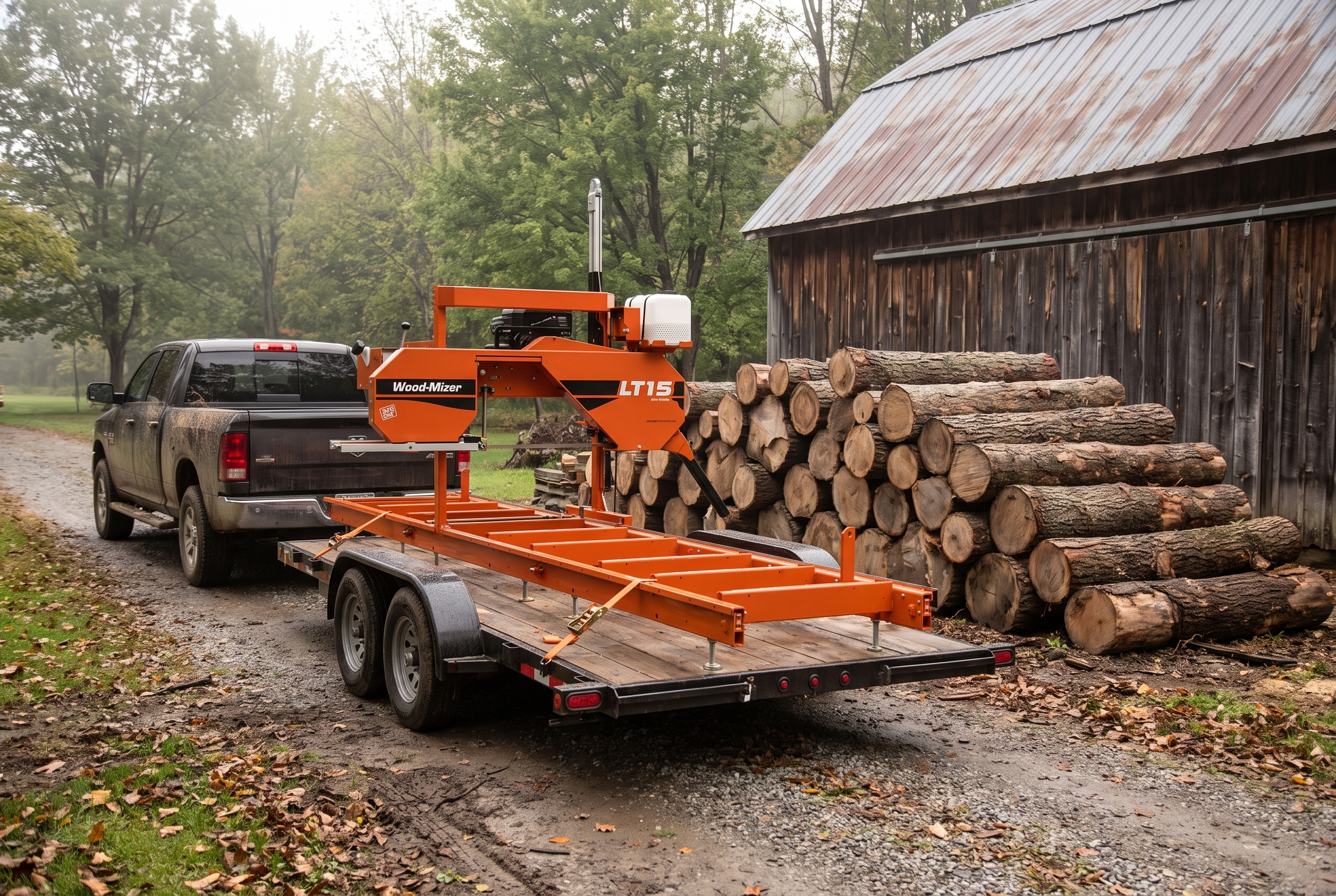
The first paying job I ever ran with the mill was a pile of storm-downed red oak behind a dairy barn about forty minutes from our place. I had no insurance, no written agreement, no idea what to charge, and I hit a fence staple in the second log. I still made money that day. I also learned more about running a sawmill business in eight hours than I had in two years of reading about it. If you are wondering how to start a sawmill business, and specifically a mobile one where you haul the mill to the customer’s logs, this guide is the version of that day I wish someone had handed me first.
Quick Answer: To start a mobile sawmill business you need a portable bandsaw mill you can tow (realistically $5,000 to $25,000 new, less used), a truck and trailer, basic log-handling and safety gear, an LLC, general liability plus inland-marine equipment insurance, and a pricing sheet built around $80 to $155 per hour or $0.35 to $1.00 per board foot with a $100 to $200 minimum. Most operators start part-time, book their first jobs through arborists and Facebook groups, and reach a steady $300 to $600 day within their first season.
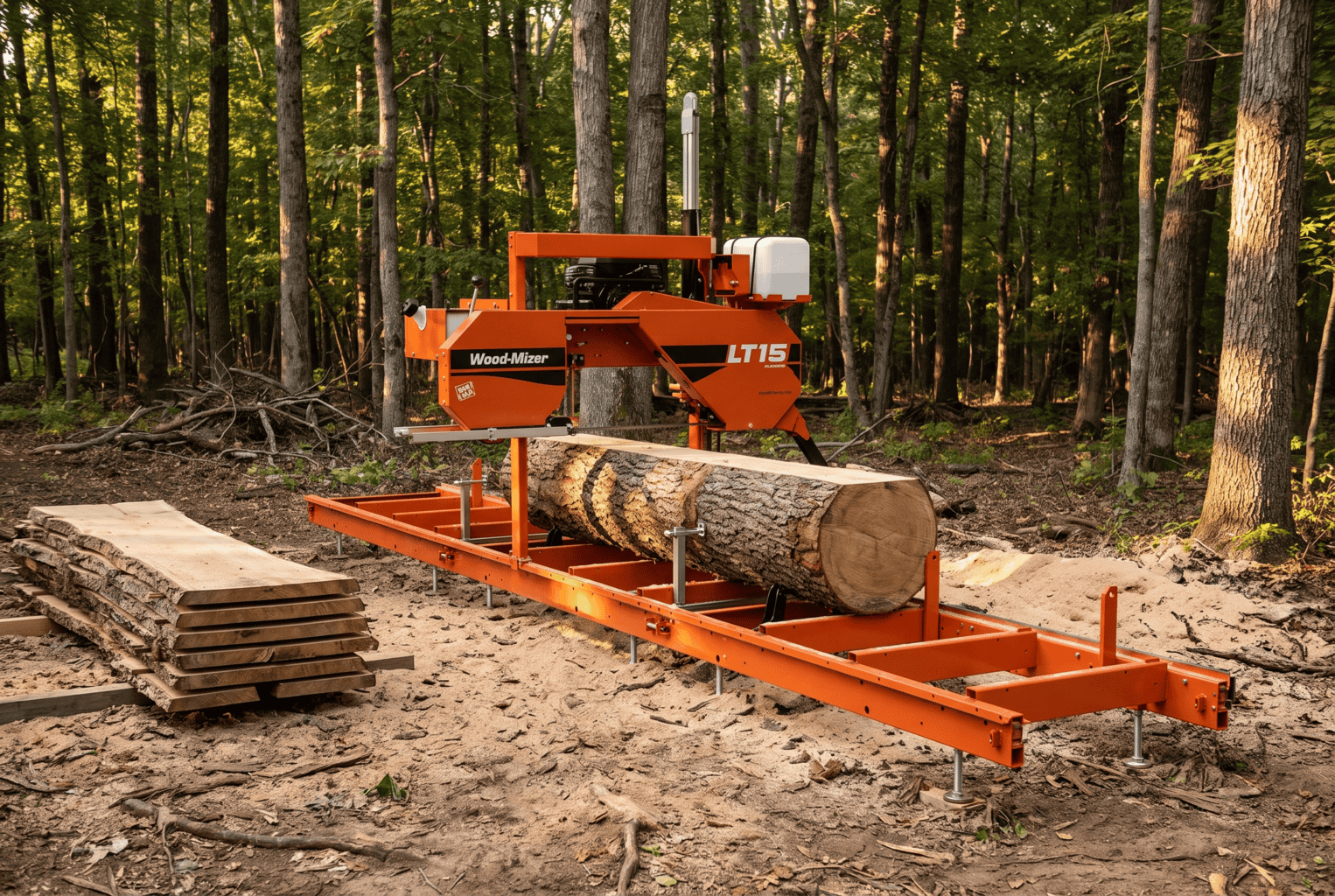
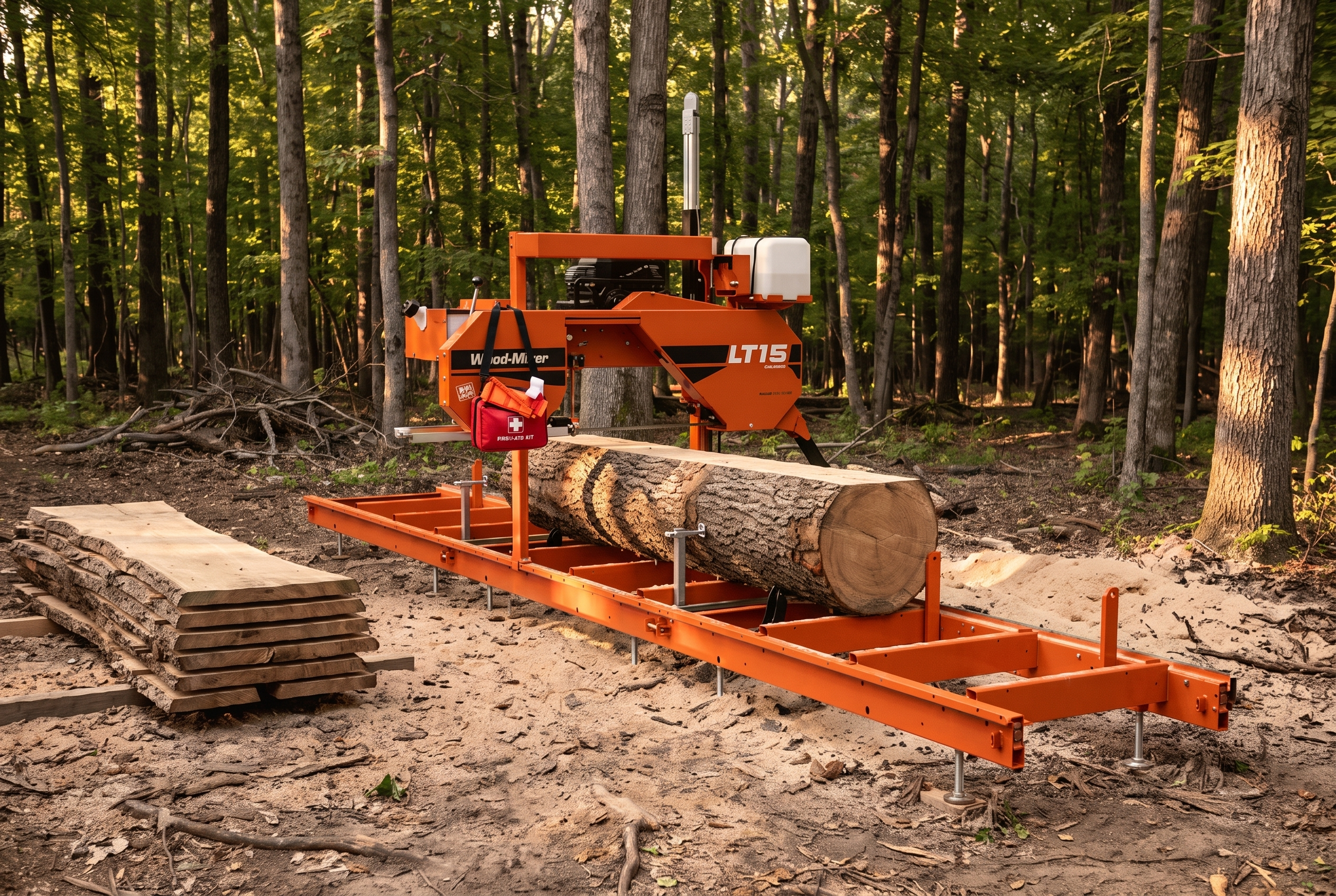
I’m Jason Lewis. I’ve run portable mills for over ten years, most of that on a manual Wood-Mizer LT15 cutting upper-Midwest hardwoods, and a good chunk of our income comes from taking that mill to other people’s logs. Everything below is what we actually did, what we would do differently, and what the numbers look like when nobody is trying to sell you a mill.
Last Updated: September 2026 | Jason Lewis has run a manual Wood-Mizer LT15 on upper-Midwest hardwoods for over ten years, including mobile custom-sawing jobs on customers’ logs.
What a Mobile Sawmill Business Actually Is
A mobile sawmill business is a custom-sawing service where the operator tows a portable bandsaw mill to the customer’s property and saws the customer’s own logs into lumber for an hourly or per-board-foot fee — the customer keeps the wood, so there is no log inventory or drying yard to fund.
People use “sawmill business” to mean three very different operations, and you need to pick one before you spend a dollar, because the equipment, the insurance, and the customers are different for each.
Custom sawing on-site (mobile). You tow the mill to the customer’s property and saw their logs into the lumber they want. They keep the wood, you get paid for the work. No log inventory, no drying yard, no lumber to sell. This is the lowest-risk way into the trade and the one this article is about.
Custom sawing at your yard. The customer brings logs to you (or you fetch them) and picks up lumber later. You need space, a way to unload logs, and a place to stack what you cut. Better production because the mill never moves, but you become the storage and handling department.
Producing and selling lumber. You buy or salvage logs, saw them, dry them, and sell boards or slabs. Highest ceiling, highest capital, slowest cash. You are now in inventory, drying, and retail, not just sawing.
| Business model | Startup capital | Cash comes in | Biggest risk | Best first step for |
|---|---|---|---|---|
| Mobile custom sawing | Lowest: mill + trailer + insurance | Same day, at the job | Travel time, dirty logs, no-shows | Almost everyone starting out |
| Yard custom sawing | Medium: mill + land + loader or tractor | At pickup, days to weeks later | Log pile you can’t move, storage | Operators with acreage and a tractor |
| Lumber production and sales | Highest: mill + logs + drying + storage | Months later, after drying | Capital tied up in wood nobody bought yet | Sawyers with a sales channel already |
Most of the operators I know who make real money do a mix: mobile sawing pays the bills and builds the phone list, and the good logs they get offered along the way become slabs they sell later. But they all started with the mobile side, because it turns a mill into cash the fastest. If you are still deciding on the mill itself, start with our complete guide to portable sawmills and come back here.
Is a Sawmill Business Profitable? The Honest Math
Yes, a mobile sawmill business can be profitable, and it can be profitable fast compared to most equipment-heavy trades, because the customer supplies the raw material. But the range between a good operator and a struggling one is enormous, and it almost always comes down to three numbers: your rate, your board feet per hour, and how much of your day is not sawing.
Here is what a real day on a manual mill looks like for us. I have gone into the income side in much more depth in how much you can make with a portable sawmill, so this is the short version.
| Line item | Solo, manual mill (our LT15) | With a helper, hydraulic mill |
|---|---|---|
| Realistic sawing hours in an 8-hour day | 5 to 6 | 6 to 7 |
| Board feet produced | 400 to 800 BF | 1,500 to 2,500 BF |
| Gross at $0.50/BF | $200 to $400 | $750 to $1,250 |
| Gross at $100/hr sawing time | $500 to $600 | $600 to $700 |
| Fuel, blades, lube, wear (approx.) | $40 to $80 | $90 to $160 |
| Helper wage | $0 | $150 to $250 |
| Travel (fuel + unpaid time) | $30 to $80 | $30 to $80 |
Read that table closely and two things jump out. First, on a manual mill, hourly pricing beats board-foot pricing almost every time, because a manual mill’s bottleneck is the operator turning logs and offloading boards, not the blade. Second, the helper on the hydraulic mill costs money but roughly triples production. That is the whole argument for eventually upgrading, and also the argument for not starting there. You do not know your market’s volume yet.
The old extension-service figure everybody quotes is that a portable mill costs about $0.15 per board foot to run and sawyers charge $0.20 to $0.35. That number is decades old. In 2026, Wood-Mizer’s own pricing guide puts custom sawing at $80 to $155 per hour and $0.35 to $0.75 per board foot for straightforward softwood, climbing to $0.75 to $1.00 for hardwoods and custom cuts. Our operating cost on the LT15, all consumables in, still lands somewhere around $0.15 to $0.20 per board foot on clean hardwood, so the margin is real. The catch is everything that is not sawing: driving, setting up, waiting on a customer who forgot to move his truck, and the twenty minutes you spend fishing a nail out of a walnut log.
Step 1: Prove There Is Demand Before You Buy Anything
Most new sawmill businesses that fail did not fail because of the mill. They failed because the owner bought the mill first and went looking for customers second. Around here I can name three guys who bought a nice hydraulic mill, sawed their own barn lumber, and then sold the mill two years later at a loss because the phone never rang.
Before you order anything, spend two weeks doing the unglamorous part:
- Call three tree services and two arborists. Ask what they do with the big trunks. Most of them pay to have logs hauled or chip them. An arborist who can tell a homeowner “I know a guy who will turn that maple into your dining table” wins jobs. That is your first referral network.
- Search Facebook Marketplace and local groups for “sawmill” and “custom sawing.” If there is already a sawyer in your county, look at his prices and his backlog. A sawyer booked six weeks out is proof of demand, not competition.
- Look up the Wood-Mizer “Find a Local Sawyer” map and Norwood’s and Woodland Mills’ equivalents. Count how many operators are within an hour of you. In a lot of rural counties, the answer is zero or one.
- Talk to a cabinet shop and a timber framer. Ask what they cannot get locally. The answer is usually wide boards, long beams, or specific species, all of which a portable mill produces better than a commodity mill.
- Post one honest test ad. “Portable sawmill coming to your property. I’ll saw your logs into lumber. Message for a quote.” No mill in the photo, no lies. If you get five serious messages in a week, you have a business. If you get none, you learned something for free.
When I did this the first time, I thought I had a good handle on demand because I knew a lot of woodworkers. What I did not know was that the tree services were the real customer pipeline. One arborist has sent us more paying work than every woodworking club combined, because he is standing next to a homeowner with a freshly felled tree and a sentimental attachment to it every single week.
If you already run a tree service
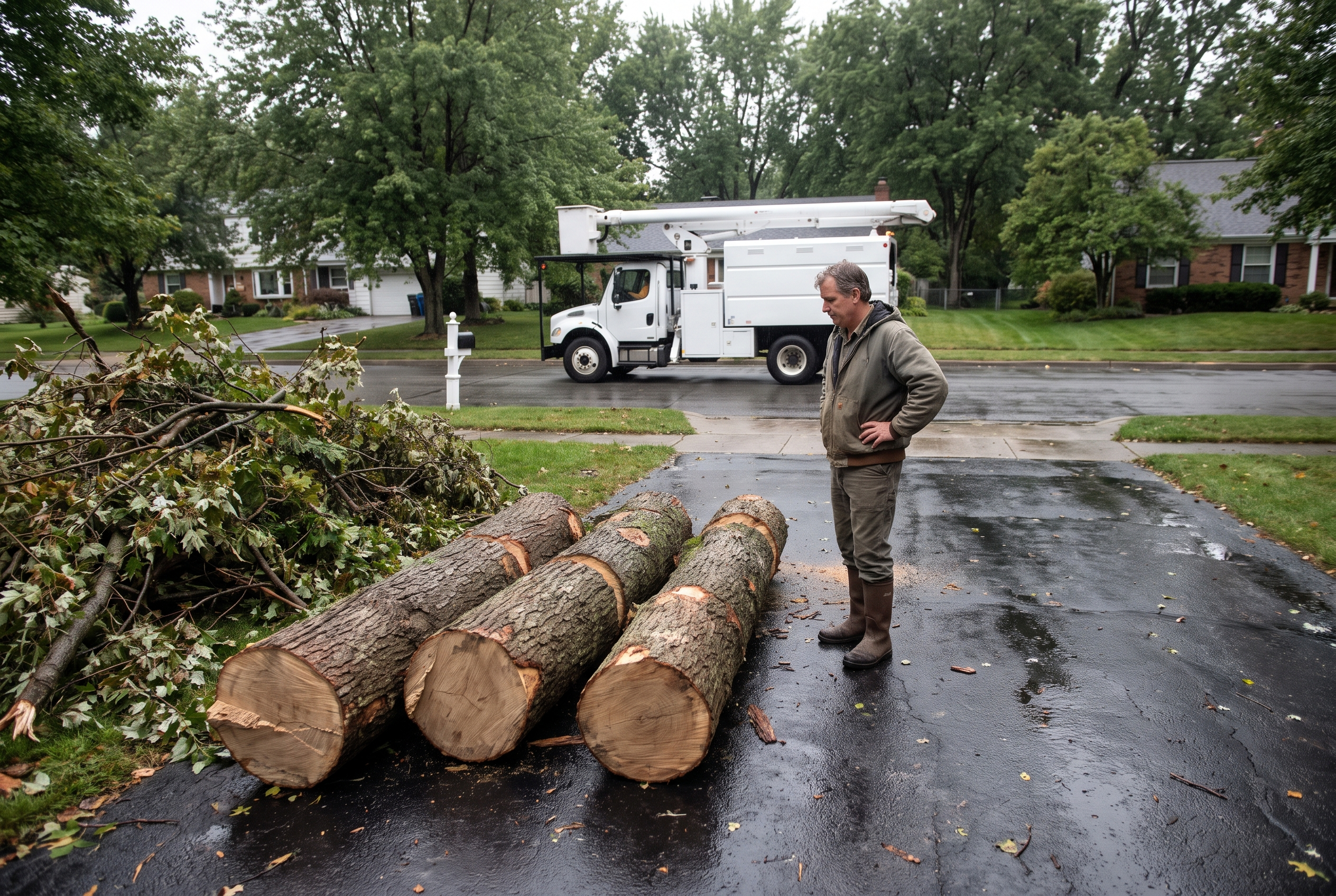
Everything above is written for a sawyer who needs logs. If you take trees down for a living, you have the opposite problem: the logs are free, they show up every week, and you are currently paying to chip or haul them. What you need to prove is that somebody will pay for them as lumber. That test is easier than ours, and you can run it in a month without buying anything.
- Ask the next ten removal customers one question: “Do you want this milled into slabs or boards instead of chipped?” Write down the yes count. Three out of ten is a business.
- Count last month’s trunks over 20 inches. A 24-inch by 10-foot log yields roughly 150 to 200 board feet. Multiply your trunk count by that and by $0.50 to $1.00 a board foot, and you have the money you are throwing in the chipper.
- Sell one batch before you buy a mill. Have one good trunk custom-sawn by a local sawyer, sticker it, and post the slabs. If they sell, you have demand and a supplier, and the supplier is you.
Step 2: Startup Costs for a Mobile Sawmill Business
The mill is the biggest line item, but it is usually less than half of what you actually spend to get to your first job. Here is what a mobile setup costs at three realistic levels. These are ranges, not quotes, and they move with the used market, so treat them as a budget frame. For a full breakdown of the mills themselves, see how much a portable sawmill costs at every price tier.
| Item | Bare bones (part-time, manual) | Working setup (what we run) | Pro mobile (hydraulic, full-time) |
|---|---|---|---|
| Bandsaw mill | $4,000 to $9,000 (entry manual, new or used) | $10,000 to $20,000 (manual, wider capacity, trailer package) | $25,000 to $50,000+ (hydraulic loading, turning, power feed) |
| Trailer | $0 to $2,500 (existing utility trailer, adapted) | $1,500 to $4,000 (dedicated trailer or factory trailer package) | Included with most hydraulic mills |
| Tow vehicle | What you already own | Half-ton pickup minimum | Three-quarter-ton or better |
| Log handling | $150 to $300 (cant hook, log ramps you build) | $400 to $1,200 (cant hook, ramps, winch, log arch or chain) | $0 to $2,000 (hydraulics do the work; skid steer if you own one) |
| Chainsaw for bucking and trimming | $300 to $600 | $600 to $1,000 (60cc class or bigger) | $800 to $1,200 |
| Blades (starting stock of 10) | $250 to $350 | $250 to $350 | $300 to $450 |
| PPE and first aid | $200 to $400 | $300 to $500 | $300 to $500 |
| Insurance (first year) | $800 to $1,500 | $1,000 to $2,500 | $2,000 to $5,000+ |
| LLC, EIN, local registration | $50 to $500 (varies by state) | $50 to $500 | $50 to $500 |
| Marketing (signs, cards, website) | $100 to $300 | $300 to $800 | $500 to $1,500 |
| Realistic total | $6,000 to $15,000 | $15,000 to $32,000 | $30,000 to $65,000 |
A few notes from experience on that table. The blades line looks small and it is not. On dirty, storm-downed logs you can dull two or three blades in a day, and the customer usually did not debark anything. Budget for a sharpener or a sharpening service before you think you need one. Our bandsaw mill blade guide covers what actually kills blades and when to sharpen versus replace.
The trailer matters more than you would think. We ran our LT15 on an old car hauler for the first year, unbolting it at every job. It worked. It also cost me about forty-five minutes of setup and teardown per job that I was not billing for. The day we went to a dedicated trailer setup where the mill stays put, we picked up almost an hour of billable time a day. That upgrade paid for itself in about six jobs.
Step 3: Choosing the Mill for a Mobile Business
For a mobile sawing business the mill has to do three things: tow behind a normal pickup, set up level on uneven ground in under thirty minutes, and cut the diameter of logs your customers actually have. Everything else is preference.
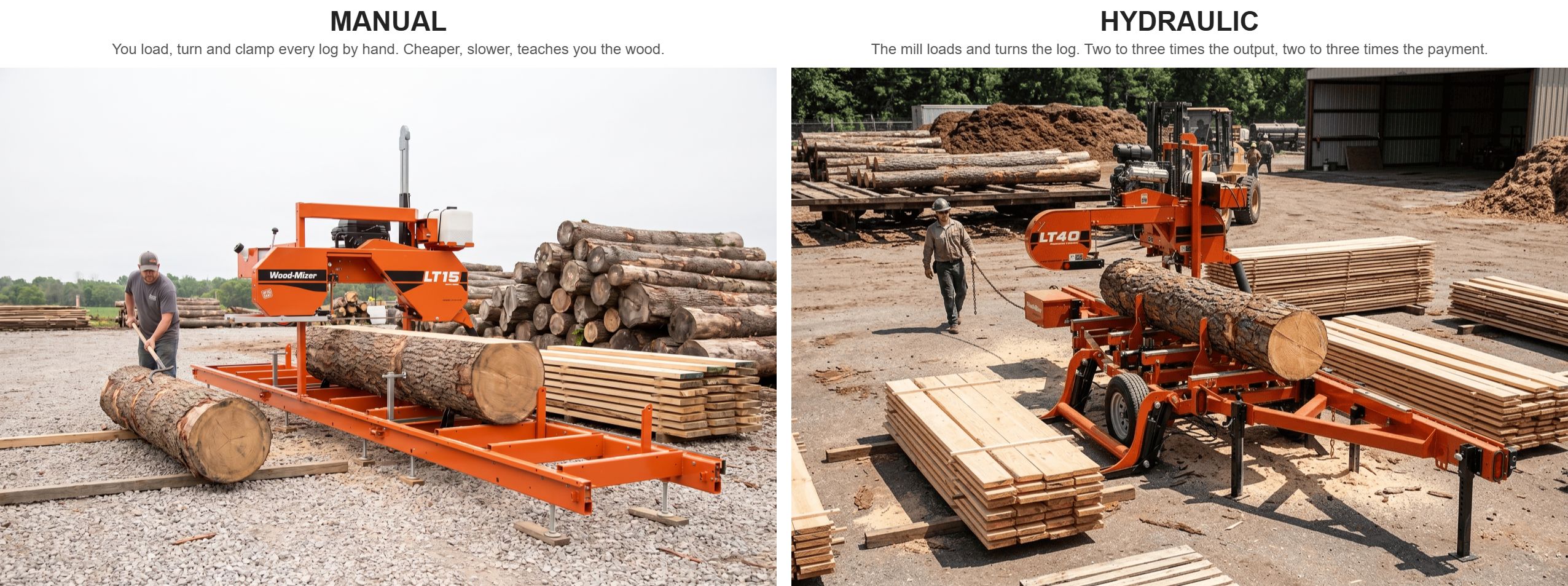
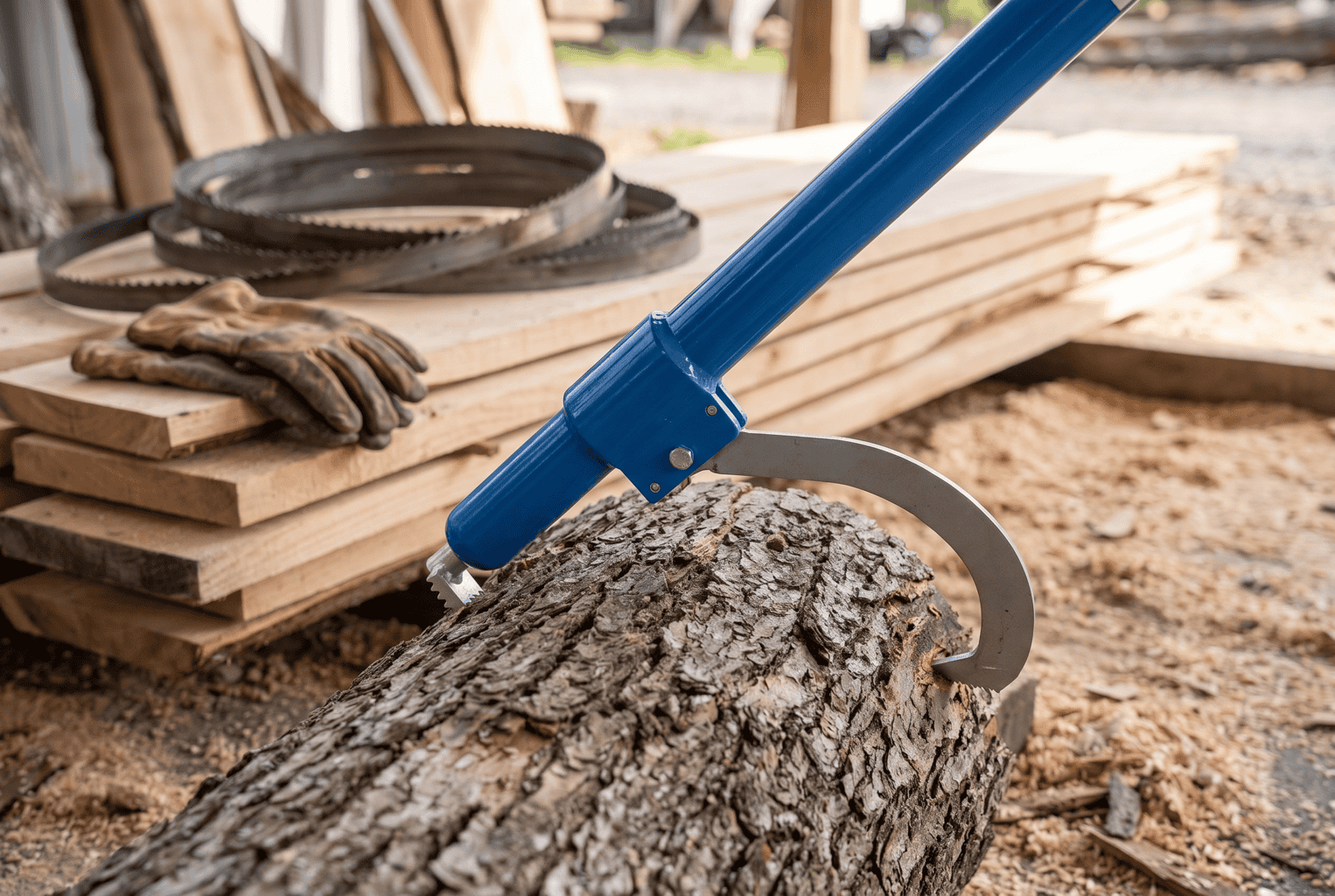
Manual versus hydraulic is the decision that matters. A manual mill like our LT15 (the current model is rated for 32-inch logs and a 30-inch width of cut) means you load, turn, and clamp every log by hand with a cant hook and ramps. Ours is a 60-inch aluminum LogRite, rated for 10- to 36-inch logs — this is the same one on Amazon — and it is the first thing I would buy after the mill. That is fine on 16 to 24-inch logs and brutal on 30-inch oak. A hydraulic mill loads and turns the log with a lever. It doubles or triples your daily output and roughly doubles or triples your mill payment.
My honest advice, having done it the hard way: start manual unless you already have a booked customer list. A manual mill is cheap enough to pay off in one part-time season, and it forces you to learn how a log wants to be sawn before hydraulics let you get sloppy. When you find yourself turning down 30-inch logs because your back hurts, you will know exactly which hydraulic features you need and you will have the revenue to pay for them. I wrote up our full experience in the Wood-Mizer LT15 review, including what I would buy today.
Cut capacity. Ask the tree services from Step 1 what diameter they are dealing with. In our area, a mill that handles a 28 to 30-inch log covers about 90 percent of what comes off residential lots. Do not pay for 36-inch capacity you will use twice a year.
Brand. Wood-Mizer, Norwood, Woodland Mills, TimberKing, and Hud-Son all build mills that can run a mobile business. What matters more than the badge is parts availability and blade compatibility in your area. We compared the big three head to head in Wood-Mizer vs Norwood vs Woodland Mills.
New versus used. A well-kept used mill from a major manufacturer is a great way to start, and there are a lot of them for sale from the guys I mentioned who bought first and marketed second. Check the blade guide bearings, the drive belt, the bed rails for wear grooves, and whether the seller kept it under cover. Bring a straightedge and a tape and check bed alignment. Ask to cut a log before money changes hands.
Step 4: The Legal Side, Insurance, and Taxes
I am not a lawyer or an insurance agent, and rules vary by state and even by county, so treat this as a checklist of what to ask about rather than legal advice. This is the part almost everyone skips and then regrets the first time a customer’s kid wanders toward a running mill.
Form an LLC
A single-member LLC costs somewhere between $50 and $500 to file depending on your state, and it puts a wall between your business and your house. You are running a machine with a 1.25-inch blade spinning at highway speed on a stranger’s property. Get the wall. Get an EIN from the IRS (free, takes ten minutes online) so you are not handing your Social Security number to every customer who wants to 1099 you.
Insurance you actually need
Standard homeowner or farm policies generally do not cover business use, and a regular commercial property policy often does not cover equipment once it leaves your property. For a mobile sawmill, the three coverages that come up over and over are:
- General liability. Covers injury to a customer or damage to their property. This is the one a tree service or a commercial customer will ask to see a certificate for before they refer you.
- Inland marine (equipment in transit). Covers the mill itself while it is on the road and on a job site. It is the policy designed for mobile equipment, and it is the one most new sawyers have never heard of.
- Commercial auto. If your truck is towing a business trailer to a paying job, your personal auto policy may not respond. Ask your agent directly.
Several specialty insurers write portable-sawmill packages, and a local independent agent who does farm and logging accounts will know them. For a one-person, part-time operation, budget on the order of $1,000 to $2,500 a year and get real quotes, because this number varies a lot with location, revenue, and whether you have employees.
Employees, OSHA, and helpers
If it is just you, federal OSHA rules generally do not apply to a self-employed owner with no employees. The moment you hire a helper, even part-time, you are an employer and OSHA’s sawmill standard (29 CFR 1910.265) plus the general PPE, hearing, and machine-guarding rules apply, and you will likely need workers’ compensation insurance depending on your state. A lot of sawyers run a “helper” off the books for years. That is a risk decision, and I would not make it.
Permits and taxes
Mobile sawing on a customer’s property rarely needs a special permit because you are not operating a fixed business at a location, but some towns treat any commercial activity in a residential zone as an issue, and noise complaints are real. I covered the noise side in whether it is legal to run a sawmill at night, and the short answer is: know your local ordinance before you promise a Saturday morning start. Sales tax on services also varies by state. Some states tax custom sawing, some do not. Ask an accountant one time and write down the answer. If you eventually sell lumber, you may need a grading certificate or stamp for structural use, which we walk through in how to get your lumber certificate.
Step 5: How to Price Your Sawing Services
There are three ways to charge for custom sawing, and the right one depends on the log, the customer, and how much risk you want to carry. I will go deep on this in a dedicated pricing article, but here is the framework we use.
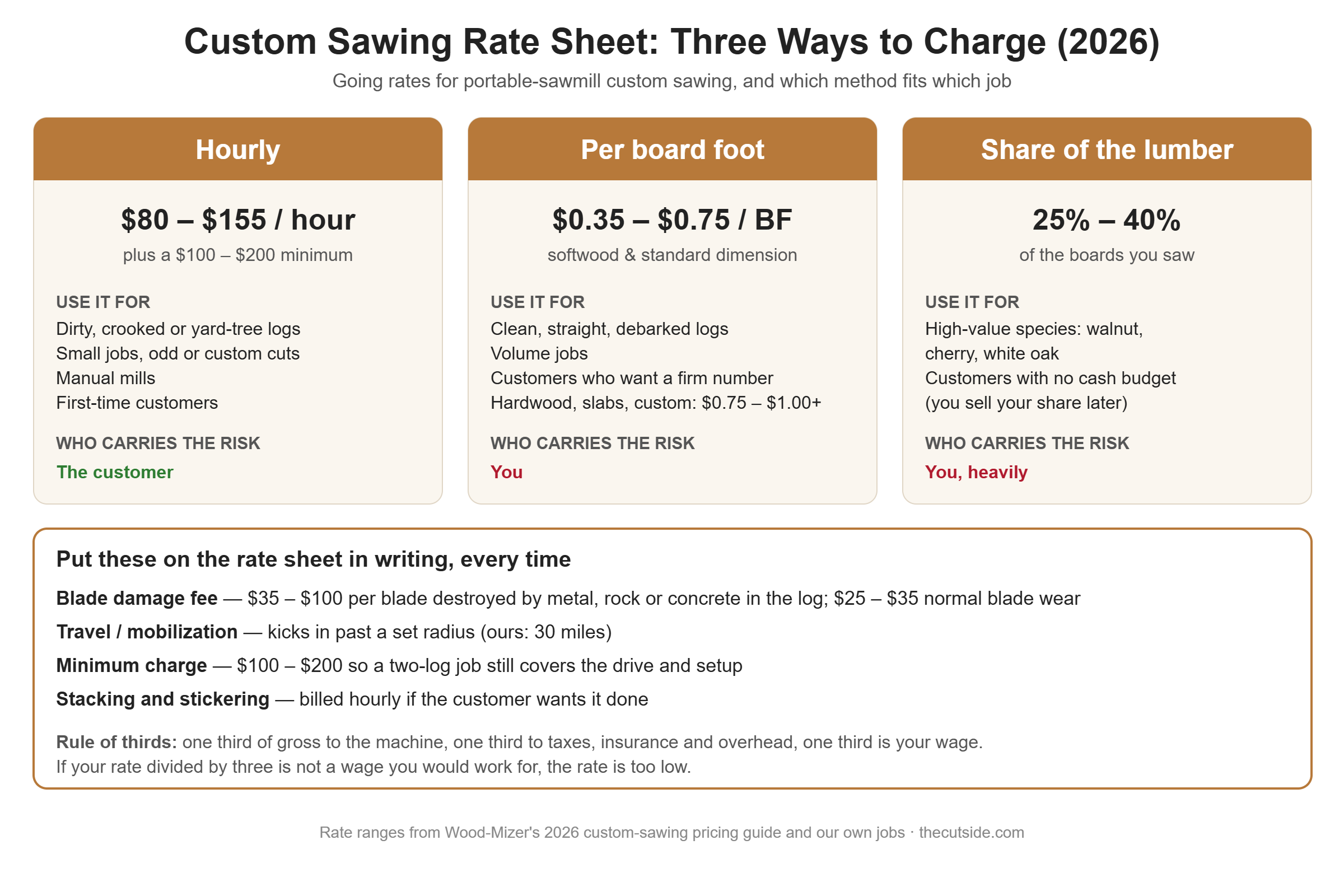
| Method | 2026 going rate | Use it when | Who carries the risk |
|---|---|---|---|
| Hourly | $80 to $155 per hour, plus a $100 to $200 minimum | Dirty or crooked logs, small jobs, custom or odd cuts, manual mills, first-time customers | Customer. Slow logs cost them, not you. |
| Per board foot | $0.35 to $0.75 for clean softwood and standard dimension; $0.75 to $1.00+ for hardwood, slabs, or custom | Clean, straight, debarked logs; volume jobs; customers who want a firm number | You. A muddy log or a hidden nail comes out of your pocket. |
| Share of the lumber | 25 to 40 percent of the boards | High-value species (walnut, cherry, white oak) and customers with no cash budget | You, heavily. You have to sell your share later. |
We price almost everything hourly, quoted as an estimate with a range, for one reason: our mill is manual. On a manual mill the operator is the bottleneck, and a board-foot rate punishes you for every big, ugly log. Hourly also fixes customer behavior. When people know the clock is running, the logs are staged, the ground is clear, and there is a helper waiting when you pull in.
Whatever method you pick, put these add-ons on your rate sheet in writing:
- Blade damage fee for metal, rocks, or concrete in the log. Wood-Mizer’s 2026 guide puts the industry norm at $25 to $35 for normal blade wear and $35 to $100 per blade destroyed by foreign objects. We charge the replacement cost of the blade, flat, and we say so before we cut.
- Travel or mobilization fee beyond a set radius. Ours kicks in past 30 miles. Fuel and an hour of your day are real costs.
- Minimum charge of $100 to $200 so a “just two logs” job covers the drive and setup.
- Stacking and stickering if the customer wants it done, billed hourly. Otherwise the lumber comes off the mill and it is theirs.
The rule of thirds is the sanity check I run on every rate: one third of gross covers the machine (fuel, blades, maintenance, payment), one third covers taxes, insurance, and overhead, and one third is your wage. If your hourly rate divided by three is not a wage you would work for, your rate is too low. You can rough out any quote with our board foot calculator before you show up.
Step 6: Job Intake, Quoting, and the Written Agreement
The phone call before the job is where most of your profit is decided. Here is what I ask every customer before I agree to a date, in the order I ask it:
From experience: My first paid mobile jobs were right around $100 an hour, which is close to what most guys charge, roughly $60 to $125 depending on the mill, the area, and the job. The biggest thing I learned was to ask how the logs are getting onto the mill and who is handling the lumber coming off. A job sounds simple until you get there and find out the logs aren’t staged, there’s nothing to move them with, and you spend half your day doing everything except sawing.
- What species, how many logs, and how big? Get a diameter at the small end and a length. People overestimate diameter by about four inches every time, so I ask them to put a tape on it.
- Are the logs already down and bucked to length? If the tree is still standing or still in 40-foot lengths, that is a chainsaw job before it is a sawmill job, and it is billed as such or declined.
- Where are the logs, and can I back a trailer to within twenty feet of them? A log I have to move 100 feet with a cant hook is an hour of unpaid work. A log up a soft hill in April is a no.
- Is the ground level enough to set up the mill? Gravel, a driveway, or a mowed flat lawn is fine. A slope means blocking, and blocking means time.
- Were these yard trees? Yard trees mean nails, fence wire, clothesline hooks, and the occasional horseshoe. It does not stop the job; it changes the price and the blade-fee conversation.
- What do you want cut, and what is it for? “Boards” is not an answer. One-inch for siding, two-inch for a bench top, 2.5-inch slabs for a table, or 6×6 posts all saw differently and take different amounts of time.
- Will someone be there to offload boards? On a manual mill, a customer who pulls boards and stacks them roughly doubles my output, and I tell them that in those words.
Then I send a one-page agreement. It has the hourly rate, the minimum, the blade fee, the travel fee, a line that says the customer supplies the logs and any helper, a line that says I am not responsible for internal defects, rot, or metal in the log, and a line about payment on completion. It does not need a lawyer. It needs to exist. The one time a customer disputed a blade fee with me, I pulled out the paper he signed and the conversation ended.
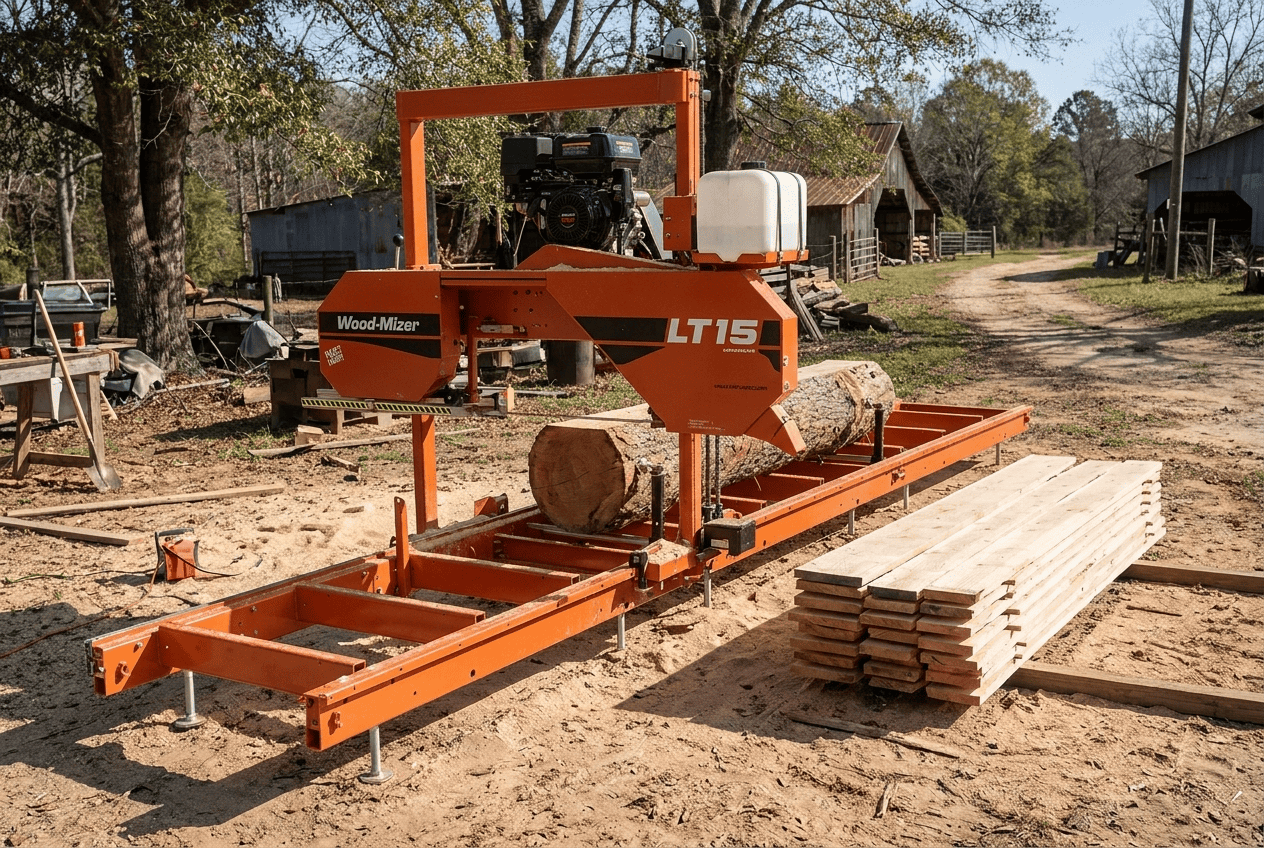
Step 7: Finding Logs and Finding Customers
In a pure mobile business the customer brings the logs, so “finding logs” and “finding customers” are the same problem. These are the channels that have actually worked for us, roughly in order of how much paying work they produce.
Tree services and arborists. Already covered, and worth repeating. Drop off business cards, offer them a referral fee or a free hour of sawing for their own shop, and be reliable. When they call, answer.
Facebook Marketplace and local groups. Post finished work, not the mill. A photo of a stack of fresh-sawn white oak with the caption “Sawed on site from a customer’s storm-damaged tree, Brown County” gets shares. A photo of your mill on a trailer gets ignored. Answer messages within the hour; the customer who asks about sawing is often standing in his yard looking at the tree.
Manufacturer sawyer directories. Wood-Mizer’s Find a Local Sawyer map and the equivalents from Norwood and Woodland Mills are free listings that get real inquiries, because people who buy those mills tell their neighbors to look there.
Woodworking clubs, timber framers, and furniture makers. These are lower volume but higher value: they want specific species and specific cuts, they understand what quartersawn means, and they come back. This is also the market for live-edge slabs if you ever move into selling lumber.
Farmers and rural landowners. Fence boards, barn siding, and beams from their own trees. They are practical, they pay on the day, and they have neighbors.
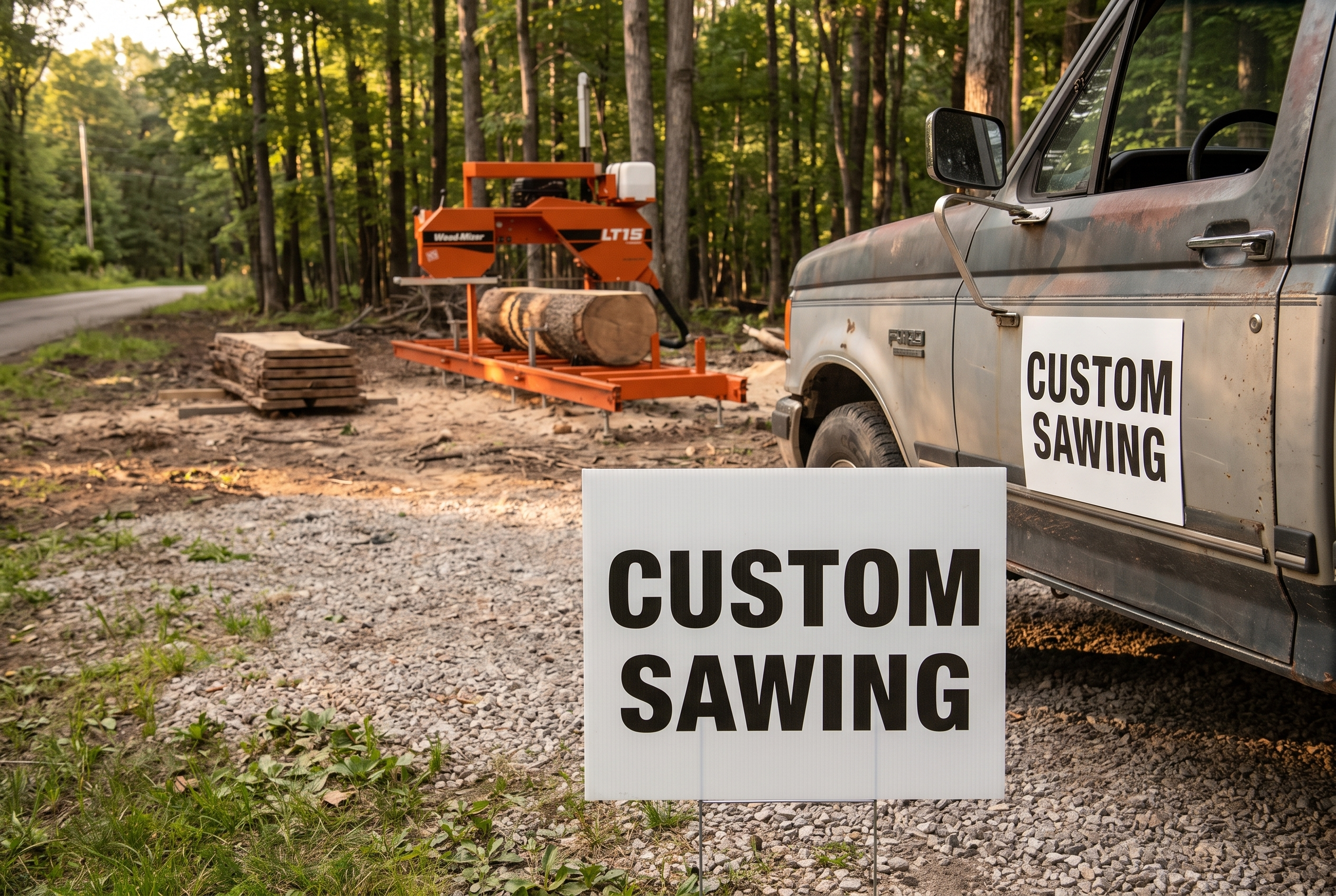
A yard sign and a magnet on the truck. Cheap and surprisingly effective in rural areas. Half the jobs we get in our own township came from someone driving past the mill running in our yard.
On the log side, if you do end up buying or salvaging logs to saw and sell, the same arborists are your source, along with storm cleanup, land clearing crews, and Marketplace posts from people who just want a trunk gone. Never pay full price for a yard tree. Assume there is metal in it and price accordingly.
Step 8: Your First Season, Realistically
Here is the timeline I would follow if I were starting again, assuming a manual mill and a day job.
Month 1: Set up and saw your own logs. Learn the mill on wood you do not have to apologize for. Time yourself. Figure out how long setup really takes, how many boards you get from a 20-inch, 10-foot log, and how often you are changing blades. Write it all down. These numbers are your pricing.
Month 2: Do three cheap jobs for people you know. Charge something, not nothing. Free work teaches customers that your time is worth nothing and teaches you nothing about collecting money. Ask for photos and a Facebook review.
Months 3 to 4: Go public. LLC filed, insurance bound, rate sheet written, agreement template ready. Post the photos from Month 2. Visit the tree services. Book weekends.
Months 5 to 8: Fill weekends, track everything. Every job, log a line: hours on site, hours driving, board feet, revenue, blades used, fuel. By the end of this stretch you will know your real hourly earnings to the dollar, and you will know whether this market supports a hydraulic mill or a second trailer or neither.
Months 9 to 12: Make the decision. If you are turning down work, look at hydraulics or a helper. If you are not, keep it part-time and profitable. There is no shame in a mill that makes $15,000 a year on weekends and pays for the deer lease. That is a good business.
Two rules I would put on the wall. Keep at least a few months of operating cash in the business account before you quit any other income, because sawing is seasonal and the slow months are real. And never turn down the small job in a new area. The two-log job in a town you have never worked is a billboard.
Mistakes That Kill New Sawmill Businesses
I have made about half of these myself and watched the rest happen to people I like.
- Buying the mill before finding the customers. The number one killer. Do Step 1 first.
- Pricing by board foot on a manual mill. You will work for $12 an hour on the first crooked oak and wonder why.
- No blade fee in writing. One horseshoe in a maple can eat a $30 blade and forty-five minutes. Without the fee agreed up front, that is your money.
- Underestimating handling time. On a manual mill, sawing is maybe half the day. Moving logs, offloading boards, and setting up is the other half. Bill for all of it.
- Skipping insurance because it is “just weekends.” The customer’s property does not know it is a weekend.
- Saying yes to everything. Standing trees, logs in a swamp, a “quick” 40-inch burl, a customer who wants to pay in firewood. Learn to quote high or decline.
- Not writing anything down. If you do not know your board feet per hour and your cost per board foot after ten jobs, you are not running a business yet, you are running a hobby that occasionally gets paid.
- Working alone with no plan. Text someone when you start and finish a job. Keep a real first aid kit and a real tourniquet on the mill. Ours is a North American Rescue C-A-T Gen 7, the windlass type you can put on one-handed — this is the same one on Amazon — and at about $32 it is the cheapest insurance on the trailer. The kit it rides in is NAR’s compact Individual Aid Kit (compressed gauze, pressure dressing, about the size of a paperback); this is that kit. I covered all of this in our sawmill safety guide, and I mean every word of it.
Frequently Asked Questions
Is a sawmill business profitable?
A mobile custom-sawing business can be profitable within its first season because the customer supplies the logs and pays the same day. Typical 2026 rates of $80 to $155 per hour or $0.35 to $1.00 per board foot against operating costs of roughly $0.15 to $0.20 per board foot leave real margin. The operators who struggle usually priced too low, bought too much mill too early, or never built a referral pipeline.
How much does it cost to start a mobile sawmill business?
A realistic bare-bones start with an entry-level manual mill, a trailer you already own, basic log handling, PPE, insurance, and an LLC runs about $6,000 to $15,000. A more capable working setup is $15,000 to $32,000, and a hydraulic, full-time-ready rig is $30,000 to $65,000 or more. The mill itself is usually less than half the total.
Do you need a license to run a portable sawmill business?
In most U.S. states there is no sawmill-specific license for mobile custom sawing, but you will generally need a business registration or LLC, possibly a local business license, and you should carry general liability and equipment insurance. If you sell lumber for structural use, some states or buyers require graded or stamped lumber. Rules vary by state and county, so confirm with your state’s business office and a local accountant.
How much do sawmill owners charge per board foot?
In 2026, custom sawyers typically charge $0.35 to $0.75 per board foot for clean softwood and standard dimension lumber, $0.75 to $1.00 for hardwoods and custom cuts, and up to $1.00 to $2.00 for specialty slabbing or very large logs. Many operators, especially on manual mills, prefer hourly rates of $80 to $155 with a $100 to $200 minimum.
Can you make a living with a portable sawmill?
Yes, but usually not on a manual mill alone. Full-time sawyers who make a living almost always run a hydraulic mill, often with a helper, and combine on-site custom sawing with selling higher-value lumber or slabs. A manual mill is an excellent part-time business and the right way to learn the market before committing to a full-time setup.
The Bottom Line
Starting a mobile sawmill business is one of the few equipment trades where you can be cash-positive in your first season, because your raw material shows up in the customer’s yard already paid for. The mill is the easy part. The business is the phone calls before the job, the rate sheet with the blade fee on it, the insurance certificate in the truck, and the arborist who has your number in his phone.
Start manual, start part-time, price hourly, write everything down, and let the market tell you when it is time for hydraulics. That is how we did it, and the mill has never once been the thing holding us back. If you are still weighing which mill to buy, read the income breakdown next, then the portable sawmill guide. And when the first customer asks what you charge, you will already have the answer.
Written by Jason Lewis, ten-plus years running a Wood-Mizer LT15 on upper-Midwest hardwoods; the rates, intake questions, and blade-fee rules here are the ones he uses on customers’ logs.